
For retail investors, long-term crypto risk management is less about finding the next breakout token and more about managing risk consistently. Cryptocurrency markets offer outsized opportunities, but they also come with extreme volatility and unique risks that traditional investors often underestimate. This guide outlines practical, battle-tested crypto risk management strategies that everyday investors can apply.
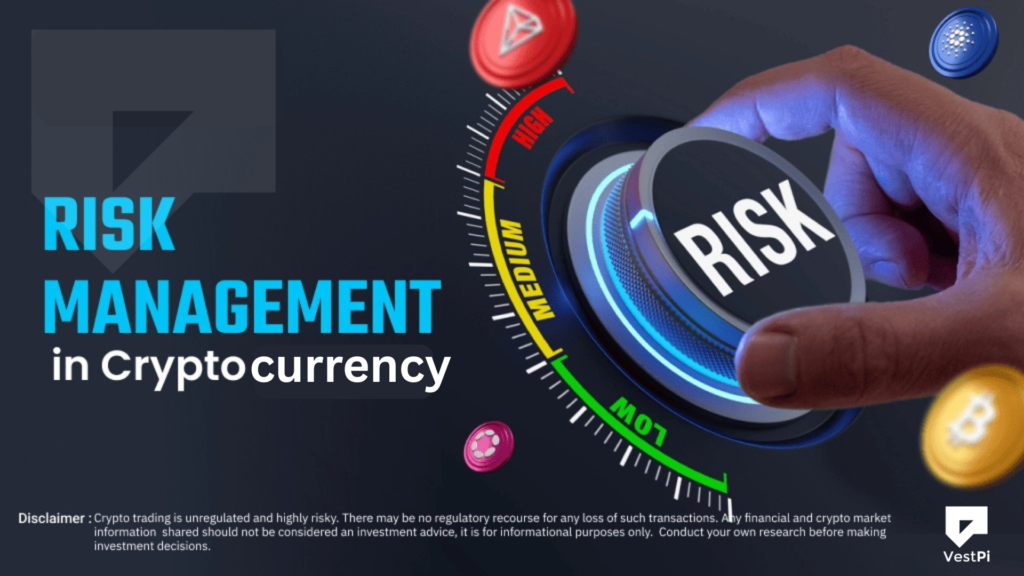
Risk Management in Crypto?
Crypto risk management is crucial for making educated investment decisions. It entails evaluating and managing any risks connected with investing in cryptocurrency assets.
While it is difficult to remove all risks, a proactive risk management strategy can considerably lessen the impact of negative events on your investment portfolio.
One of the most important parts of risk management is recognizing that a negative return can have a greater influence on long-term performance than an identical positive return.
For example, if you spend $100 and lose 50%, your investment will be reduced to $50. To recover the entire 50% loss, you must make a 100% gain. This emphasizes the necessity of risk management in protecting your wealth and increasing your overall returns.
How to Stay Disciplined in a Volatile Market
Even with a plan, remaining disciplined in cryptocurrency is difficult. FOMO, setbacks, and greed may all undermine your approach. That’s why expert traders stick to routines, track KPIs, and develop habits. Having explicit guidelines lowers reaction-based errors. Over time, discipline becomes your advantage, not your entries.
To stay disciplined, you have to:
- Limit time, transactions, and losses each day.
- Keep a trading diary to record your thoughts and feelings.
- Examine your trades every week to identify trends.
- Avoid chasing pumps or taking retribution for trade losses.
- Recall that maintaining capital is more crucial than being correct.
Best Crypto Risk Management Strategies
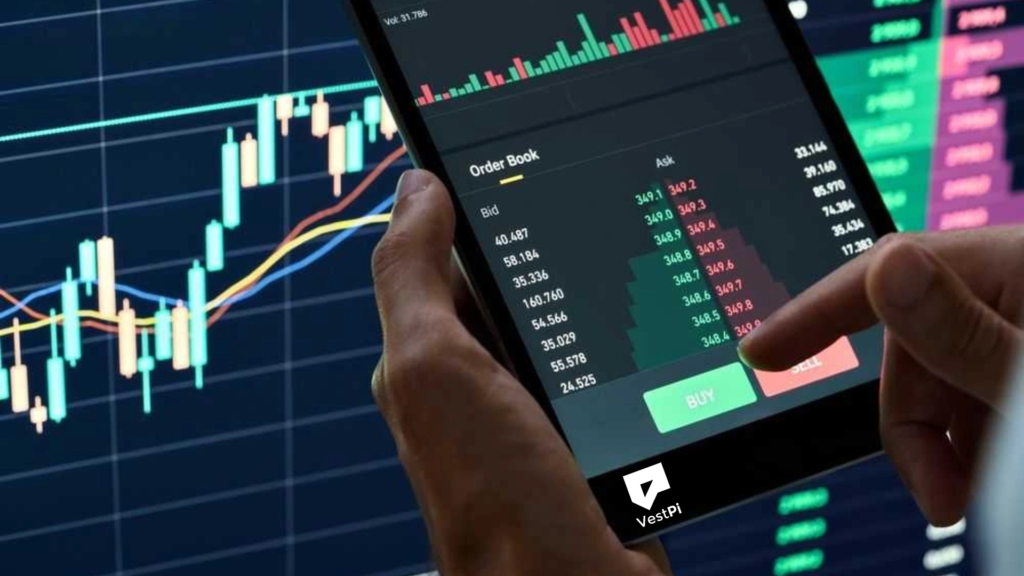
1. Understanding Risk in Crypto Markets
Crypto risk goes beyond price volatility. Retail investors face multiple layers of risk, including market risk, liquidity risk, counterparty risk, smart contract risk, and regulatory uncertainty. Unlike traditional finance, many crypto platforms operate 24/7, lack investor protections, and can fail without warning. Effective risk management starts with acknowledging these realities.
2. Diversify, but With Intention
Diversification reduces exposure to any single asset or failure point. However, over-diversification can dilute returns and complicate portfolio tracking.
Best practices:
- Allocate across asset types: large-cap coins (BTC, ETH), mid-cap altcoins, and a small allocation to high-risk tokens
- Avoid holding multiple assets that are highly correlated
- Diversify across sectors such as layer-1s, DeFi, infrastructure, and stable assets
A concentrated portfolio of uncorrelated assets often performs better than owning dozens of similar tokens.
3. Position Sizing Is More Important Than Entry Price
Retail investors often focus on timing the perfect entry, but position sizing has a far greater impact on outcomes.
Key rules:
- Never risk more than you can afford to lose on a single position
- Limit individual positions to a fixed percentage of your total portfolio
- Increase position size only as conviction and information quality improve
Small, controlled losses are survivable. Oversized positions are not.
4. Use Stop-Losses and Exit Plans
Every trade should have a predefined exit strategy. Emotional decision-making during market volatility leads to poor outcomes.
Effective approaches:
- Set stop-loss levels based on technical structure, not emotion
- Use trailing stops to protect profits in trending markets
- Define profit targets before entering a position
An exit plan turns volatility into a tool rather than a threat.
5. Manage Platform and Custody Risk
Platform failures remain one of the largest risks for retail investors. Exchange collapses, and frozen withdrawals have repeatedly wiped out user funds.
Risk reduction steps:
- Do not store long-term holdings on exchanges
- Use reputable hardware or non-custodial wallets
- Spread funds across multiple platforms if active trading is required
- Enable two-factor authentication and withdrawal whitelists
If you don’t control the private keys, you don’t fully control the assets.
6. Limit Leverage and High-Risk Products
Leverage magnifies both gains and losses. For retail investors, it is one of the fastest paths to liquidation.
Best practices:
- Avoid high-leverage products unless you are experienced
- Treat derivatives as speculative tools, not investment vehicles
- Never use borrowed funds for long-term positions
Survival is the first rule of compounding capital.
7. Account for Smart Contract and DeFi Risk
DeFi introduces additional risks that are often underestimated, including exploits, oracle failures, and protocol governance attacks.
Before using a protocol:
- Check audit history and team transparency
- Understand how funds are locked and under what conditions they can be lost
- Avoid chasing unsustainable APYs
High yield is meaningless if capital is not protected.
8. Use Stablecoins Strategically
Stablecoins can reduce portfolio volatility and provide dry powder during market downturns.
Risk-aware use cases:
- Parking capital during high volatility periods
- Earning yield on reputable, transparent platforms
- Managing fiat exposure without exiting the crypto ecosystem
Diversify stablecoin exposure to reduce issuer risk.
9. Keep Records and Review Performance
Risk management is an ongoing process, not a one-time setup.
Key habits:
- Track trades, allocations, and outcomes
- Review what worked and what failed quarterly
- Adjust strategy as market conditions evolve
Note that consistent review prevents repeated mistakes.
10. Avoid Information Overload and Emotional Trading
Crypto markets are driven by narratives, social media, and speculation. Retail investors are especially vulnerable to hype cycles.
Protect your decision-making:
- Limit exposure to noise-driven social feeds
- Verify information from primary sources
- Stick to a written strategy during periods of extreme volatility
Take Home
In crypto, risk is unavoidable, but unmanaged risk is optional. Retail investors who prioritise capital preservation, position sizing, and custody security consistently outperform those chasing short-term gains. At VestPi, we view risk management as the foundation of sustainable crypto participation — not a constraint, but a competitive advantage.
The goal is not to avoid volatility, but to survive it long enough to benefit from long-term adoption and market maturation.