
Assessing the impact of Halving on Smaller Altcoins is a big deal, and one that has been causing a supply shock that can affect prices throughout the cryptocurrency ecosystem. Bitcoin halvings are one of the most anticipated milestones in the cryptocurrency sector. However, the fundamental question lingers: Does the Bitcoin halving effect on altcoins exist, or is it all hype?
Understanding the Bitcoin Halving
Every four years, the Bitcoin network gives miners the cold shoulder by halving the block reward for mining new blocks. This critical occurrence changes Bitcoin’s economic foundation by reducing supply and increasing demand.
Historically, these halvings have caused significant volatility in Bitcoin’s price, prompting strategic shifts among miners and speculators. As a result, this cyclical event influences market dynamics and lays the groundwork for broader economic effects in the crypto realm, controlling the rhythm of market cycles and investor expectations.
In economics, this phenomenon is known as the ripple effect, in which one entity’s activities can and will influence the behaviour of others. This is analogous to the waves formed by a stone tossed into a pond, and in the case of Bitcoin, the splashes from this occurrence can indeed form waves that reach the far beaches of the altcoin markets.
Why Bitcoin Halving Matters to Crypto Markets
Bitcoin halvings have a big impact on the cryptocurrency market. Bitcoin prices have a significant impact on the cryptocurrency market mood, making it a popular metric among investors.
So we know that Bitcoin’s price can have an impact on the entire cryptocurrency market. But do halvings actually have a significant impact on the value of Bitcoin?
A Bitcoin halving reduces miners’ block rewards by half, slowing Bitcoin’s supply growth pace. During the 2020 halving, block rewards decreased from 12.5 BTC to 6.25 BTC. This decreasing supply makes the largest cryptocurrency scarcer, potentially increasing its price. That’s why investors pay close attention to halvings: historical data shows that these events result in substantial price hikes.
How Bitcoin Halving Affects the Crypto Market
The halving of Bitcoin has a direct impact on its price behaviour and investor decisions, as well as the altcoin market. Although Bitcoin price swings constantly influence general market sentiment, halvings enhance this effect by significantly slowing the rate at which new coins enter circulation. The unexpected scarcity that follows a halving frequently generates significant buying demand, pushing Bitcoin’s price upward.
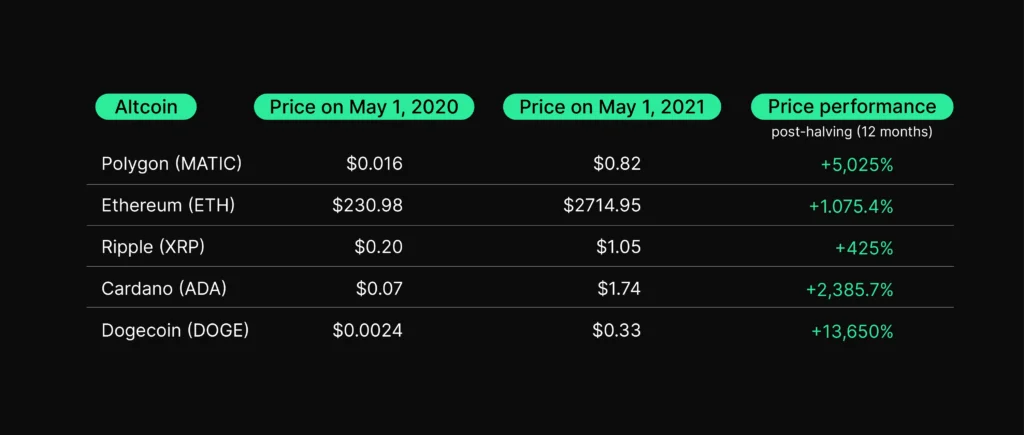
The historical data certainly support this pattern. Within a year of the May 2020 halving, Bitcoin increased from $8,500 to over $60,000 in value. Altcoins such as Ethereum, Cardano, and Solana followed suit and had considerable price gains during this time, proving that Bitcoin’s positive trends frequently spread to the broader cryptocurrency market.
Understanding these aspects allows you to better forecast market behaviour prior to and following halvings. You may leverage historical trends to make smart investing decisions, taking advantage of Bitcoin’s supply-driven market cycles. Don’t forget to conduct your own research before developing a future investment strategy.
Impact of Bitcoin Halvings on Altcoins?
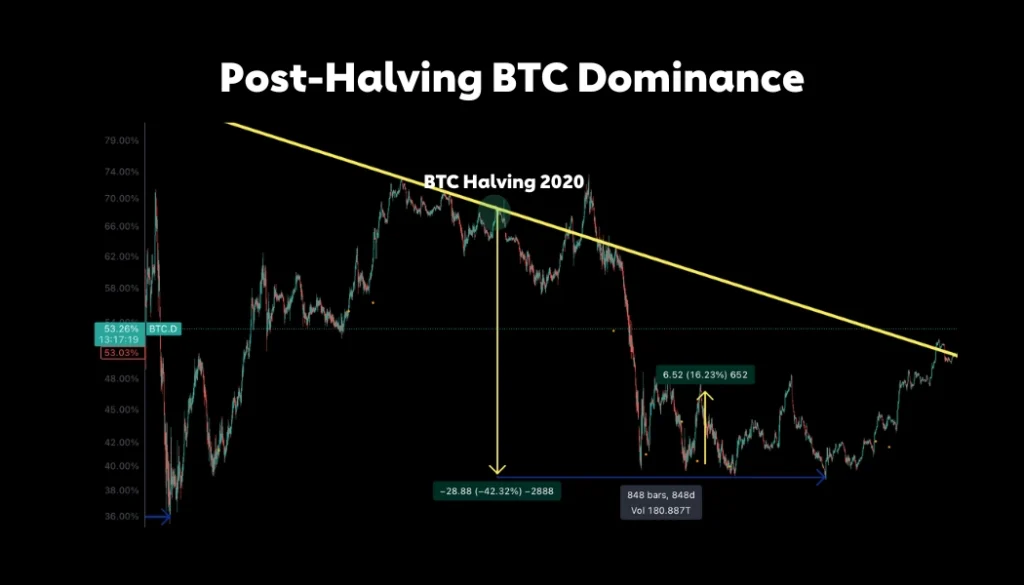
Following the May 2020 halving, the crypto industry’s market capitalisation increased from $180 billion to more than $2 trillion in less than a year. During the same period, the top 30 cryptocurrencies by market cap increased by 308% (+$552 billion), nearly triple their gain from 2019.
This association exists because altcoin investments frequently follow Bitcoin’s lead. As Bitcoin gathers traction, investor confidence grows. Traders shift profits from Bitcoin to altcoins, raising their prices. Furthermore, news of BTC price increases frequently brings new investors into the market. This behaviour continues after each halving, resulting in predictable patterns in the cryptocurrency market.
Market dynamics change as a result. Bitcoin’s dominance often peaks around halving dates and subsequently decreases. In May of 2020, Bitcoin’s dominance increased to 66.43%.
The Bitcoin network and mining economics have an impact on longer-term trends. When mining rewards fall, miners hold rather than sell. The lower Bitcoin enters exchanges, and scarcity pushes prices. This attracts new investors into altcoins seeking bigger returns.
You can take advantage of this pattern. Monitor halvings and prepare for changes in the altcoin market capitalisation. Historical trends indicate that altcoins tend to follow Bitcoin’s lead, particularly in the months after halving events.
Do Bitcoin Halvings Trigger Altcoin Season?
Bitcoin halvings frequently pave the way for altcoin season. This is the time when cryptocurrencies outpace Bitcoin in terms of price appreciation. It normally begins a few months following a halving, when Bitcoin has completed its initial rally.
An altcoin season usually follows a post-halving Bitcoin rise. The cause, however, is not merely rising Bitcoin prices, but also capital rotation. Once Bitcoin’s velocity slows, investors shift their winnings to higher-risk assets such as altcoins in search of larger returns.
To detect these trends early, monitor measures such as BTC dominance, altcoin trading volume, and total market capitalisation excluding BTC. These signs typically lead cryptocurrency breakouts by days or even weeks. An altcoin season is not inevitable after every halving, but past market dynamics suggest a consistent pattern.
Why Altcoin Prices Often Follow Bitcoin
Due to structural ties in market behaviour and trading infrastructure, altcoin projects and their prices tend to move in tandem with Bitcoin. This association grows more pronounced during important Bitcoin events such as halvings or institutional adoption periods. Here are the main reasons why this occurs:
- Bitcoin is one of the most common trading pairs for most altcoins.
Bitcoin is the most often used cryptocurrency for trading. When Bitcoin climbs, BTC-based altcoin valuations rise by default. - Market sentiment tracks Bitcoin price changes.
A BTC surge boosts confidence throughout the market. When Bitcoin declines, traders frequently exit their altcoin positions first to protect losses. - Crypto speculators move earnings from Bitcoin to altcoins.
Once Bitcoin reaches its peak, wealth often flows into altcoins in search of bigger returns. This causes cryptocurrency market cap increases and altcoin season patterns. - The second Bitcoin halving cuts supply once again.
In April 2024, mining payouts decreased from 6.25 BTC to 3.125 BTC. This supply increased BTC’s price within a year while also driving more cash to altcoins. - Institutional Bitcoin ownership affects overall cryptocurrency trading.
Large firms amassing Bitcoin frequently trigger broad market rises. This draws new retail investors and boosts cryptocurrency popularity.
Instances of Altcoins Impacted By Bitcoin Halving 2020 (USD)
Market Dynamics
The halving of Bitcoin has a significant impact on the cryptocurrency market, including liquidity, trading volumes, and the speed of new altcoin initiatives. The Bitcoin Dominance Index indicates a steady reduction in Bitcoin’s market dominance after halving, allowing altcoins to capitalise on the move and collectively enhance their market capitalisation.
Innovation and Adaptation
After halving, the cryptocurrency technological environment frequently enters a period of fast evolution. Developers may accelerate the release of new features or enhancements in order to maintain their coin’s relevance in a market readjusting after Bitcoin’s large shift. Although 72% of crypto projects have died since 2020, this surge of innovation pushes the technological frontiers, notably in terms of improving transaction speeds and expanding smart contract capabilities.
Top Altcoins to Keep An Eye On During a Bitcoin Halving
In retrospect, Bitcoin halving has a big impact on the cryptocurrency business, affecting several altcoins in various ways. Here are five key altcoins to keep an eye on during such events.
BNB
Binance is one of the world’s largest cryptocurrency exchanges, and BNB is its utility cryptocurrency. Naturally, as the halving occurs and investor activity increases, exchange platforms’ user base grows, as does the worth of their tokens and currencies.
BNB is already one of the top ten cryptos on the market, and further market activity might propel it even higher.
Ethereum
Ethereum is the most established smart contract platform on the market. It powers thousands of decentralised applications and is crucial to industries such as DeFi and NFTs. Increased market activity following a Bitcoin halving frequently spills over into Ethereum due to its existing popularity, deep liquidity, and usefulness. Ethereum is generally the first stop for investors transitioning from Bitcoin to altcoins due to its widespread usage and institutional recognition.
Solana
Solana is renowned for its high-speed, low-cost blockchain infrastructure. It appeals to developers and traders seeking efficiency, particularly during bull markets when Ethereum gas fees rise. Solana tends to gain traction after halving, as trade volumes increase and consumers seek scalable alternatives. Its thriving ecosystem, which includes DeFi, NFTs, and consumer apps, positions it well to benefit from the increased activity caused by Bitcoin’s price movements.
Tron
Remember how we said Bitcoin was one of the most popular trading pairs? There is one cryptocurrency that has the potential to be much more popular: the stablecoin USDT. And, like Ethereum, Tron is one of the most popular networks for USDT tokens. Its advantages include extremely low costs (5 USDT per transaction) and high levels of network security. All of these make it one of the finest altcoins to monitor after the halving.
Dogecoin
Dogecoin, as a meme cryptocurrency, is more susceptible to market emotion than the usual coin or token. As a result, it stands to benefit even more from increased investor activity, a greater number of funds in the market, a favourable investor mood, and so on.
Just be cautious: memecoins are high-risk, high-reward investments. They can burn you or send you to the moon. DYOR, and take everything of the “investment advice” you receive on social media during bull markets with a grain of salt.
What Is The Best Altcoin Exchange?

When choosing an altcoin exchange, it is critical to strike a balance between security, user experience, and the number of supported cryptocurrencies. Changelly stands out in all of these categories, providing a streamlined platform for cryptocurrency aficionados.
Key Features
- Extensive cryptocurrency support. Changelly provides access to over 1,000 cryptocurrencies and is constantly introducing new, exciting projects.
- User-friendly interface. The platform is intended for both new and experienced traders, delivering a seamless trading experience.
- Competitive fees. Changelly has a fixed price of 0.25% for crypto-to-crypto transactions, making it an affordable option for traders.
- Convenient cryptocurrency purchases. Along with its trading widget, Changelly allows you to acquire cryptocurrency by aggregating rates from a number of reputable fiat suppliers.
- Mobile accessibility. Changelly’s mobile app allows customers to trade on the go.
Takeaway
Clearly, Bitcoin halvings can have a major influence on altcoins, especially if liquidity flows out of Bitcoin and into high-potential tokens. Keeping track of the global financial situation, new altcoin initiatives, technological advancements in the blockchain area, and so on can all help you succeed if you want to invest in digital assets following a BTC halving.
Understanding the trends behind halvings is critical for making informed decisions and maximising your benefits, whether you own Bitcoin or are investigating altcoins. Don’t forget to conduct extensive research, keep increased volatility in mind, and remember that having a sound strategy is the key to long-term success.
Frequently Asked Questions
What Exactly Is Bitcoin Halving, and Why Does It Happen?
The truth is that Bitcoin halving is a scheduled occurrence that cuts miners’ payouts by 50%. It happens every 210,000 blocks in order to limit Bitcoin’s supply and maintain scarcity over time. This has a direct impact on bitcoin mining profitability and serves to manage inflation in the cryptocurrency ecosystem. As a result, halvings are important market dynamics that will influence the future performance of Bitcoin and the broader cryptocurrency ecosystem.
How Does a Bitcoin Halving Impact the Prices of Altcoins?
Note that Bitcoin halvings frequently result in price increases due to limited supply and increasing investor interest. As Bitcoin’s price climbs, fresh capital enters the market, raising the entire cryptocurrency market capitalisation. This has a ripple effect, as cryptocurrency traders shift earnings from Bitcoin to altcoins, increasing demand. The impact on altcoins is generally positive, particularly for those with good fundamentals and active ecosystems.
Does Every Bitcoin Halving Guarantee an Altcoin Season?
No, an altcoin season does not always follow every halving. Even though the upcoming halving may lead to more interest in the bitcoin field, market factors, including macroeconomic conditions and mood around the world, still have an impact. The usefulness of blockchain technology and technological developments also affects whether altcoins acquire traction.