
Having a deep understanding of ETH gas fee is a critical step to using the Ethereum network effectively. In this content, we’ll cover the basics of Ethereum gas fees, including what they are, how they’re calculated, causes of high gas fees, and how layer 2 solutions like Polygon and future technologies could affect fees in the future.
What Is Gas (Ethereum)?
Gas fees are transaction levies paid to stakers on the Ethereum network in order to perform transactions. Gas fees are used to reimburse stakers for their labor in verifying transactions and assisting with network maintenance while carrying out “operations” on the Ethereum network, such as transmitting ETH or utilizing a smart contract.
Gwei, a minuscule portion of an ETH, is used to pay these fees. One ETH is precisely equivalent to one quintillion wei, which is a 1 followed by eighteen zeros. Gas fees are most frequently expressed in gigawei, or one billion wei.
Getting the Gas Price
To determine the current gas price if you are on the Ethereum mainnet, use Etherscan’s gas tool. Please be aware that gas prices are subject to change; to view the most recent pricing, constantly consult the tool.
Gas is necessary for the Ethereum network to carry out transactions. You have to pay for that computation if you send tokens, engage with a contract, send ETH, or do anything else on the blockchain. Gas, which is normally paid for in ETH, is used to calculate that payment.
Whether your transaction is successful or not, you are still responsible for the computation. Validators must complete and carry out your transaction, which requires processing resources, even if it fails. Just like you would pay for a successful transaction, you have to pay for that computation.
Getting the Gas Limit
I suppose you know how much each unit of gas costs, but how many units do you need to purchase? If the transaction is basic, such as sending ETH or an ERC-721 token to another address, you should spend 21,000 gas units.
For more sophisticated tasks, consider using a block explorer like etherscan.io. Navigate to the contract you want to interact with and begin reviewing transactions conducted with it. This can help you understand how much gas other users truly consume.
How Are Ethereum Gas Fees Calculated?
At first, the price per unit and the gas limit controlled the gas expenses. Ethereum modified its gas fee computations in August 2021 to include units of gas needed, a base fee (a fixed fee for the transaction set by the network), and a priority fee.
The priority fee is a tip to the validator that picks a transaction; the more you give, the more likely it is that your transaction will be completed more quickly. Use the following formula to determine gas costs.
- Total fee = Gas limit x (Base Fee Rate + Tip)
Suppose you wish to give a friend on the Ethereum network one ETH. This transaction’s gas limit is 21,000, which is the standard for straightforward Ethereum transactions. You choose to set the gas pricing at 100 gwei, indicating that each unit of gas utilized in the transaction will cost you 100 gwei.
Simply multiply the gas price (100 gwei) by the gas limit (21,000) to determine the gas fee for this transaction, then convert the result to ETH.
- 21,000 gas x 100 gwei/gas =2,100,000 gwei
- 2,100,000 gwei = 0.0021 ETH
Thus, 0.0021 ETH is the gas cost (also known as the miner fee) for this transaction. Remember that more complicated transactions, like carrying out a smart contract, could cost more in gas than simpler ones, like transferring Ethereum between wallets.
Additionally, it’s critical to make sure you’re paying enough for gas so the transaction can be completed smoothly and on time.
The Role of Gas in Eth Transactions
In addition to block rewards, gas fees were implemented to compensate miners for upholding and safeguarding the blockchain. Since the implementation of proof-of-stake in September 2022, users have been rewarded with a portion of the gas fee for staking ETH. A user can make more money the more ETH they stake.
The cost of a money wire transfer is comparable to a transaction fee. The service provider charges you to use their network. By staking their ether and confirming network transactions, Ethereum validators receive these fees.
Gas costs fluctuate in reaction to supply and demand for transactions; high gas prices may result from a crowded network. However, if there is little traffic, they might be low.
What Causes High Gas Fees?
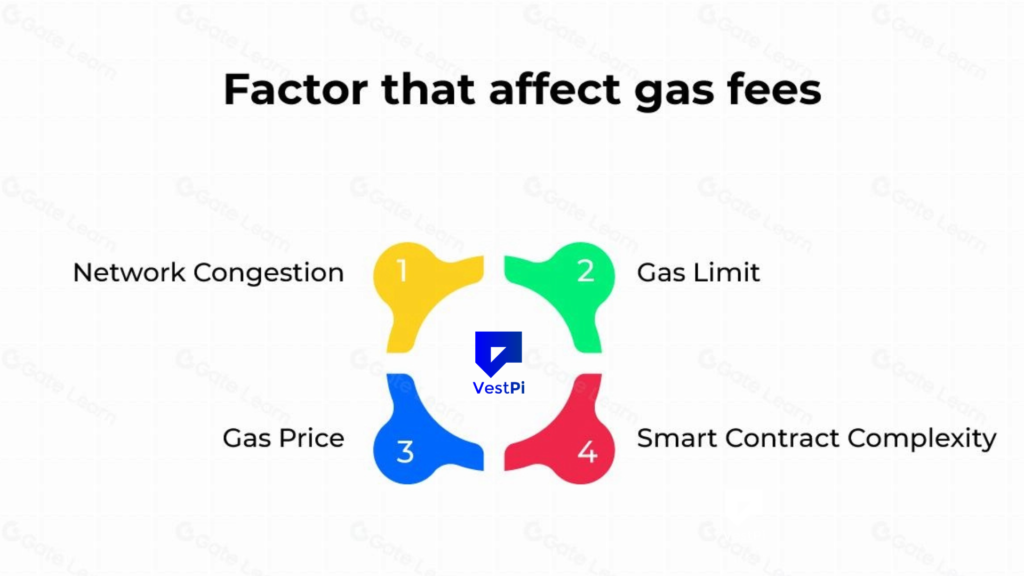
Gas fees in Ethereum transactions are frequently large and volatile due to a number of important factors.
1. Network Congestion
Network congestion is frequently caused by Ethereum’s popularity and extensive use, especially in decentralized finance (DeFi) and non-fungible token (NFT) markets.
As transaction demand increases, miners favor transactions with larger gas prices when transaction demand rises, which raises user expenses.
2. Complexity of Transactions
Gas prices rise when transactions using smart contracts or other procedures demand more processing power.
For example, because they require more processing power, smart contract executions and token transfers (such as ERC-20 tokens and NFTs) usually cost more than straightforward ETH transfers.
3. Gas Price Dynamics
Gas prices are set by miners based on network congestion and are influenced by market supply and demand. Users can set a gas limit for their transactions, which represents the maximum quantity of gas they are prepared to use.
However, during times of strong demand, gas prices spike, increasing transaction costs. Transactions below the designated gas limit might not complete properly, while those beyond it are refused.
How Future Eth/Crypto Developments Will Affect Gas Costs
On the Ethereum network, supply and demand determine gas prices. When there is a lot of demand for transactions on the network, the ETH gas charge increases. Future Ethereum gas prices may potentially be impacted by several factors, including the following:
- Layer 2 Solutions: By reducing the burden on the Ethereum mainnet, off-chain processing through layer 2 solutions may eventually result in cheaper gas prices. Ethereum L2 solutions such as Arbitrum, Optimism, zkSync Era, and Base (coming from Coinbase) are gaining popularity among ETH-accepting consumers and retailers.
- Adoption and Growth of dApps: As dApps become more widely used, there is a greater need for transactions, which may lead to increased gas prices. Don’t worry, though; Layer 2 can assist assist in counteracting this, guaranteeing that gas prices either decrease or rise more slowly.
- Rival Blockchains: Due to their low rates, blockchains like Avalanche and Polygon are becoming more and more popular. Network traffic on Ethereum will probably decline as more users switch to alternative blockchains like these, which will lower gas prices.
Strategies to Minimize Ethereum Gas Fees
High fees can be avoided through certain methods. First, consider scheduling your transactions during times when the network isn’t as busy. EtherScan offers a gas tracker that displays the high, low, and average gas prices for the day. You can use this tracker, or one similar to it, to try to time your essential transactions.
Additionally, the website offers a Chrome browser extension that allows you to view real-time gas pricing.
Second, you can conduct transactions using dApps or Layer 2 solutions. One of the best strategies to keep your costs low is to remove your activity from the main chain.
Frequently Asked Questions
Why Is Gas So High on Ethereum Right Now?
The availability of validators and network traffic determines Ethereum’s transaction fees. Fees increase with increased traffic.
What Is Ethereum Gas?
Network validators receive Ethereum gas as payment for their services to the blockchain. Nobody would be motivated to stake their ETH and contribute to network security if there were no fees.
Does Ethereum Run on Gas?
In order to compensate network validators for their efforts to secure the blockchain and network, Ethereum charges a gas fee. There wouldn’t be many incentives to stake ETH and become a validator in the absence of the fees. Without validators and the work they perform, the network would be in danger. So, in essence, it operates on gas.
Final Thoughts
Ethereum gas fees are transaction levies charged on stakers for completing transactions. To put it briefly, gas fees enable the Ethereum network and any decentralized application built upon it to “go” in the same manner that fuel runs a car.
Several factors influence how much you spend on ETH gas fees for a single transaction, including network congestion, gas limit, gas pricing, contract complexity, Ethereum network updates, and exchange rates. Certain tactics, like as transacting at off-peak times and altering your wallet settings, can also help you save money on ETH costs.