
Margin trading with crypto derivatives offers traders the ability to amplify their positions and potentially increase their profits, but that is not without Crypto Margin Trading Risks.
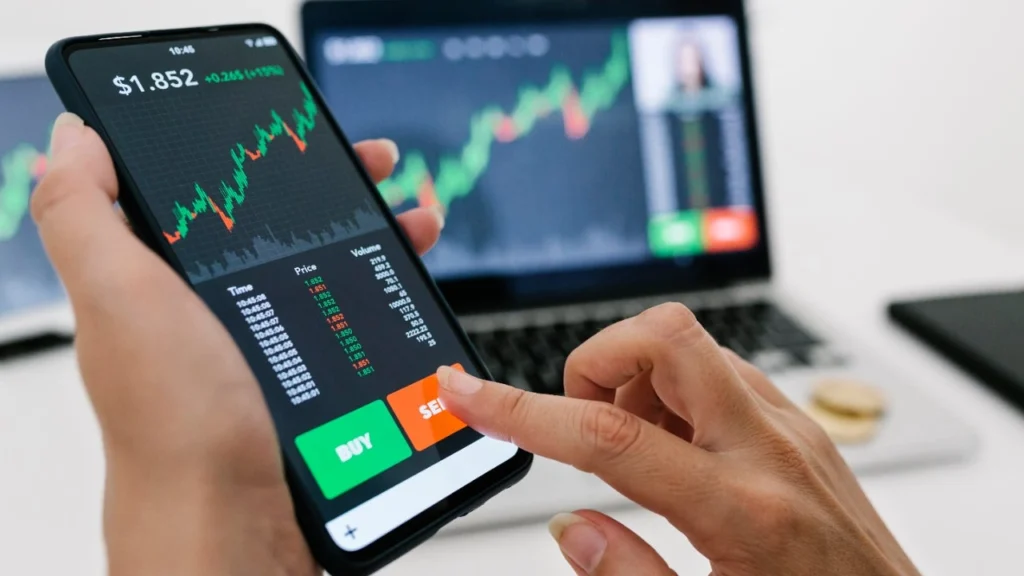
While margin trading offers large benefits, it also carries significant hazards. Here, we’ll go into the mechanics of margin trading, how it works with cryptocurrency derivatives, and the risks and rewards of this high-volume trading approach.
What Is Margin Trading?
Margin trading enables traders to borrow funds from an exchange or broker in order to execute trades that are larger than their account balance would ordinarily allow. Leverage allows traders to open positions that are a multiple of their actual capital, multiplying both potential gains and losses.
Margin can be utilised in crypto derivative trading with a variety of products, including futures contracts and options contracts, to capitalise on market price changes without having to invest the entire money up front.
Key Elements of Margin Trading
Minimum Margin
By law, your broker must acquire your permission to open a margin account. The margin account may be included in your usual account opening agreement or may be an entirely different arrangement. An initial investment of at least $2,000 is required for a margin account, while some brokerages require more. This deposit is referred to as the minimum margin.
Initial Margin
Once the account is open and running, you can borrow up to 50% of the stock’s purchase price. The portion of the purchase price that you deposit is known as the first margin. It’s critical to understand that you don’t need to margin all the way to 50%. You can borrow less, perhaps 10% or 25%. Be warned that certain brokerages demand you to deposit more than half of the purchasing price. 2
You can keep your loan for as long as you want, as long as you meet your commitments, such as paying interest on borrowed funds on time. When you sell stock in a margin account, the proceeds are applied to the loan repayment by your broker until it is paid off.
Maintenance Margin and Margin Call
The maintenance margin is the minimum account balance required for your broker to require additional deposits or stock sales to repay your loan. This is known as a “margin call.” A margin call is a request from your broking to contribute funds to your account or close holdings to reach the required level.
If you do not meet the margin call, your broking may sell your shares to meet the account minimum. Your broking firm can do this without your permission and can decide which position(s) to liquidate. In addition, your broking firm may charge a commission for the transaction(s).
How Does Margin Trading Work with Crypto Derivatives?
Margin trading with cryptocurrency derivatives requires traders to meet the first margin at the time of transaction execution in order to open a position. Once the position is open, traders must verify that their account has at least the maintenance margin, which is the minimum balance required to keep the position active.
If the market swings against the trader’s position and their account equity falls below the maintenance margin requirement, the liquidation procedure will begin.
Leverage in Crypto Derivatives
Margin trading relies heavily on leverage. Higher leverage provides greater exposure, but it also increases the danger of liquidation if the market goes negatively.
For example, with 10x leverage, a 10% reduction in the market price could result in the trader losing all of their initial investment. As a result, experienced traders must carefully control their risk when using high leverage, as even minor market movements can result in significant wins or losses.
Real-World Example of Margin Trading Magic
Let’s imagine you put $10,000 in your margin account. Putting up 50% of the purchase price gives you $20,000 buying power. If you acquire $5,000 worth of shares, you’ll still have $15,000 in buying power. You have enough cash to pay this transaction and haven’t used your margin. You begin borrowing money only when you purchase securities worth more than $10,000.
It should be noted that the buying power of a margin account fluctuates on a daily basis based on the price movement of the account’s marginable securities.
Common Types of Crypto Derivatives Used in Margin Trading
There are several popular crypto derivatives used in margin trading:
Futures Contracts: These enable traders to bet on the future value of an asset. Futures trading in cryptocurrency can involve substantial leverage and are regularly employed by traders seeking to profit from short-term price changes.
Options Contracts: Options trading allows traders the option, but not the responsibility, to buy or sell an asset at a predetermined price before an expiration date. Options contracts are less hazardous than futures, but traders can still utilise leverage to raise their exposure.
Perpetual Futures: These are identical to typical futures contracts but do not have an expiration date, allowing traders to retain positions perpetually.
The Rewards of Margin Trading with Crypto Derivatives

1. Amplified Profits
The key advantage of margin trading is the opportunity for increased profits. Traders can use leverage to handle positions far bigger than their account balance, allowing them to increase their profits. This can be especially rewarding in extremely volatile cryptocurrency markets, where asset prices can move dramatically in a short period of time.
If a trader utilises 10x leverage to go long on Bitcoin and the price grows by 5%, the return would be 50% of the starting capital. One of the primary reasons traders are driven to margin trading in cryptocurrency futures is the opportunity to make significant returns from modest price swings.
2. Hedging Strategies
Another significant advantage of margin trading is its use for hedging. Experienced traders and investors frequently utilise margin to open bets that protect against portfolio losses. A trader with a substantial amount of Ethereum may open a short position in Ethereum futures to mitigate losses if the market price declines.
Hedging with cryptocurrency futures enables traders to preserve their cash while reducing market risk, making margin trading an effective risk management strategy in unpredictable markets.
3. Increased Market Exposure
Margin trading allows traders to take larger positions and obtain more exposure to market prices without having to commit all of their capital upfront. This helps traders to diversify their trades by opening several positions across different assets, which improves their trading techniques.
Using leverage, a trader can initiate positions in both Bitcoin and Ethereum, boosting exposure to market prices and spreading risk over several assets.
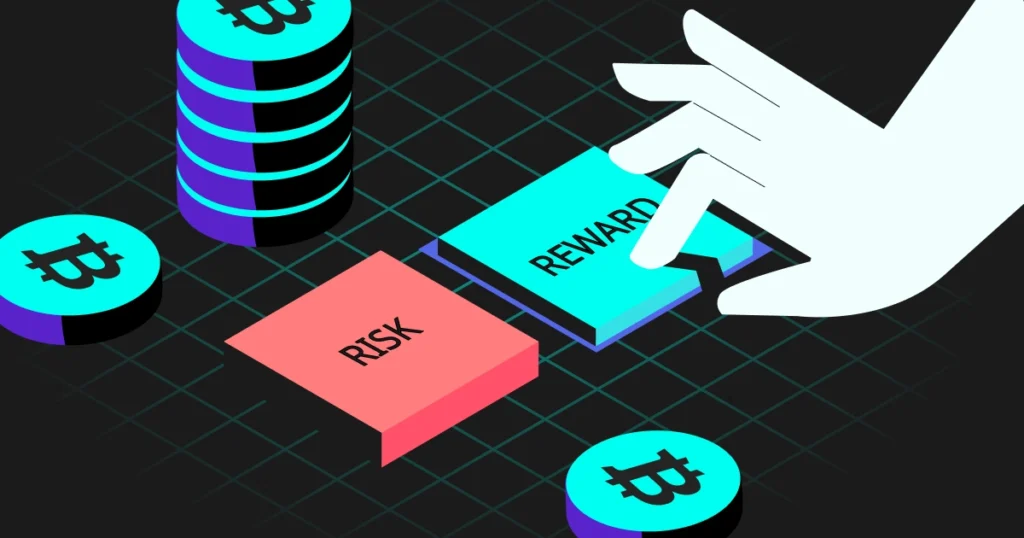
The Risks of Margin Trading with Crypto Derivatives
1. Amplified Losses
Leverage can boost benefits but also greatly raise financial losses. Even a minor shift in the asset price in the other direction might deplete a trader’s funds if they are utilising heavy leverage. This is why margin trading is typically regarded as high-risk, particularly for individuals new to crypto derivative trading.
For example, if a trader utilises 10x leverage and the market price falls by 10%, the entire position may be liquidated, resulting in a complete loss of the starting cash. This risk necessitates risk management measures like as stop-loss orders and rigorous margin monitoring.
2. Market Volatility
Cryptocurrency markets are notoriously volatile, which can be both a blessing and a problem in margin trading.
Large price changes might generate profit chances, but they can also result in sudden and unexpected losses. Because cryptocurrency market prices are volatile, positions can be liquidated in minutes, making it critical for traders to carefully manage their risk and monitor the market at all times.
Risk Management Strategies for Margin Trading
To navigate the inherent risks of margin trading in crypto derivatives, expert traders often employ several risk management strategies:
- Leverage Control: By limiting leverage, traders can lower their exposure to market risk and avoid significant losses. Using lower leverage ratios allows traders to better manage margin calls.
- Stop-Loss Orders: Using stop-loss orders is critical for reducing potential losses. These orders automatically close a position if the market swings against the trader above a predetermined level, limiting further losses.
- Diversification: Spreading funds across many derivative trades might help to reduce risk by diversifying exposure. This enables traders to diversify their risk across many assets and market fluctuations.
- Fundamental and Technical Analysis: Using both fundamental and technical analysis is essential for making informed trading decisions. Fundamental research focusses on the long-term variables that influence asset prices, whereas technical analysis helps discover trends and patterns.
Important Considerations for Margin Investors
Using margin entails borrowing, which incurs fees and requires your securities as collateral. The major cost is the interest you must pay on your loan. If you do not make payments, interest will be charged to your account.
Your debt accumulates over time as interest charges are incurred. Interest charges rise in lockstep with debt. As a result, purchasing on margin is most commonly employed for short-term investments. The longer you hold an investment, the higher the return required to break even. If you keep an investment on margin for an extended period of time, the odds of making a profit are stacked against you.
Not every stock, ETF, or security can be purchased on margin. Furthermore, not all exchanges or brokers allow margin on the investment goods they trade. Margin trading may be limited in certain investments, such as cryptocurrency.
The Federal Reserve Board determines which equities are marginable. 3 Brokers typically do not enable consumers to buy penny stocks or IPOs on margin due to their inherent risks. Individual brokerages may also opt not to margin certain stocks, so check with them to see what limits apply to your margin account.
Conclusion
Margin trading with cryptocurrency derivatives has enormous potential for both reward and danger. Using leverage, traders can considerably increase their profits, but they must be aware of the equally magnified financial losses that can occur if the market goes against them. Successful margin trading requires effective risk management, and skilled traders must be watchful about their positions, market circumstances, and margin balances.
Pro traders can open up new chances in the volatile realm of crypto derivatives trading by mastering both the dangers and rewards of margin trading. However, as with any derivative trading methods, long-term success requires balancing risk and return, remaining educated, and managing positions with discipline.