
Many cryptocurrency investors look for the best cross-chain wallets, often known as non-custodial or self-custody wallets. This is primarily due to its ability to avoid counterparty risks, allowing investors to maintain complete control over their currencies and private keys.
In this post, we’ll look at the top ten decentralized cryptocurrency wallet alternatives. Continue reading to learn more about software and hardware wallets that use decentralized storage. Providers are graded according to security features, supported networks, trading tools, and other important factors.
What Is a DeFi Wallet?
In essence, a DeFi wallet is a non-custodial cryptocurrency wallet designed to work flawlessly with decentralized finance apps.
Practically speaking, this implies that no bank or exchange may freeze the account because the user is in possession of their own private keys, which are protected by a secret recovery phrase. This direct custody, which ensures complete control over funds and the capacity to carry out transactions on-chain without the need for middlemen, is non-negotiable for an experienced trader.
A DeFi wallet acts as your single sign-on for Web3 platforms by connecting to dApps directly through wallet addresses and cryptographic signatures, in contrast to a custodial exchange wallet that requires an email login.
DeFi wallets provide much more than just coin storage for seasoned users. The majority support numerous blockchains and a broad range of tokens, which is essential for traders that diversify between ecosystems.
Benefits of DeFi Crypto Wallets
When opposed to conventional wallets, decentralized finance (DeFi) cryptocurrency wallets have many advantages, especially when it comes to their connection with Web 3.0 services. Here are a few of the main advantages:
- Decentralization: DeFi wallets eliminate the need for a centralized authority by giving users complete ownership over their assets and private keys.
- Web 3.0 Integration: Users can participate in decentralized lending, borrowing, and trading straight from their wallet by connecting DeFi wallets to decentralized apps (dApps).
- Cross-Platform Compatibility: A lot of DeFi wallets allow users to handle a range of assets by supporting several blockchain networks.
- Security and Privacy: Multi-signature capabilities, hardware wallet compatibility, and seed phrase recovery are just a few of the privacy and security features that DeFi wallets generally provide.
Best Cross-Chain Wallets for De Fi Users
Let’s examine the top cross-chain wallets for DeFi users in more detail. The most crucial aspects of each wallet, such as security, usability, and supported coins, will be examined.
1. MetaMask
Since MetaMask’s success originates from its unparalleled interoperability with decentralized apps—nearly every DeFi platform and NFT marketplace supports it for login and transactions—many seasoned cryptocurrency users don’t require any introduction.
MetaMask is used by experienced traders due to its extensive compatibility as well as its powerful features. Any EVM-compatible blockchain, from Polygon to Arbitrum, can be added to the wallet’s UI thanks to its support for custom network configurations.
A trader can handle assets across several chains in one location because of this versatility. It performs well on independent security assessments and is reasonably safe for a hot wallet thanks to regular upgrades and security patches.
One of MetaMask’s greatest benefits for experienced users is its compatibility with hardware wallets such as Ledger and Trezor. This gives traders the best of both worlds in terms of ease and security by enabling them to verify DeFi transactions using MetaMask while keeping their private keys safe offline.
A trader on the go can now execute trades or keep an eye on positions from their phone thanks to MetaMask’s mobile interface (iOS/Android), which syncs with its browser extension.
There are a few drawbacks: creating custom tokens or networks can be challenging for novices, and MetaMask can not natively handle non-EVM networks like Solana or Bitcoin.
2. Rabby Wallet
Rabby Wallet is a more recent competitor that has rapidly amassed a loyal following among professional DeFi traders. It is specifically made to solve the problems experienced by advanced users with conventional wallets. It is a browser plugin that excels in multi-chain administration and safety features, and it is now accessible on mobile devices as well.
Rabby automatically determines the network based on the dApp you’re using and supports more than 100 EVM-compatible blockchains, ranging from the Ethereum mainnet to Layer-2s like Arbitrum and zkSync.
Rabby really sets itself apart in terms of security and transaction transparency. The wallet does risk scans and pre-transaction simulations, so before you sign a DeFi action, Rabby will show you exactly how your token balances will change and highlight any possible red flags.
As a second set of eyes for the watchful trader, these pre-signing warnings can identify malicious contract behavior or ridiculous slippage. Additionally, Rabby offers comprehensive token approval management, which makes it simple to examine and remove dApp permissions—a critical step in preventing unwanted access to your money.
With a real-time portfolio dashboard that uses DeBank’s algorithms to track all of your assets across more than 100 chains in one view, the interface is clear and concise.
This eliminates the need for a separate tracker and provides experienced users with a comprehensive view of their positions. Additionally, Rabby is compatible with popular hardware wallets for users who wish to pair it with cold storage, is open-source, and has undergone frequent audits.
3. XDEFI (Ctrl Wallet)
Multi-chain functionality is crucial, and XDEFI Wallet has established itself as one of the most complete options for sophisticated users managing assets across numerous networks.
This is a powerful tool for people who genuinely work in a cross-chain environment since it encompasses not just all of the major EVM networks but also Bitcoin, Solana, Cosmos zones, THORChain, and more.
XDEFI/Ctrl removes the need to keep several distinct wallets for international traders who may simultaneously hold a Bitcoin position, yield farm on Ethereum, and trade on a Cosmos DEX. Users can quickly identify possibilities or overlooked holdings across several ecosystems thanks to its unified portfolio view, which compiles all accounts and balances.
Practically speaking, this eliminates the need for multi-chain traders to hold little quantities of each blockchain’s native token (ETH, BNB, MATIC, etc.) solely for gas. Instead, whether you’re using BSC or Polygon, a single USDC balance can cover fees.
In addition, XDEFI/Ctrl provides integrated network bridging and swapping, identifying the optimal paths so users can transfer value between chains without ever leaving the wallet. Additionally, the developers have prioritized user experience, boasting a 15-second wallet setup with social login options for novices.
4. Trust Wallet
Trust Wallet is the only wallet that can claim to combine simplicity and wide asset compatibility. It eliminates the need for separate wallets for every network and allows an experienced trader to manage a widely varied cryptocurrency portfolio within a single app, from significant holdings to experimental DeFi coins. With an easy-to-use gallery for collectors, NFTs are also supported.
Additionally, Trust Wallet has an in-app dApp browser that allows users to connect to DeFi apps right within the wallet’s interface on Android and previous iOS versions. This makes it easy to access blockchain games, produce farms, and decentralized exchanges. You can conduct fast swaps using integrated DEX services without ever leaving the app because to its built-in token swap capability.
These features make Trust a convenient one-stop shop for busy traders. Importantly, Trust Wallet doesn’t compromise on security despite being user-friendly. It has features like biometric locks, encrypted key storage on-device, and open-source code for community vetting, and it received a top-tier security grade in independent evaluations.
5. Best Wallet
Best Wallet, a rising star in the DeFi wallet sector, positions itself as a complete solution for serious cryptocurrency users. This wallet offers a sophisticated, powerful, and streamlined mobile interface. Users may monitor the performance of their portfolio, manage numerous cryptocurrency accounts, and use an integrated decentralized exchange all from within a single app.
One of Best Wallet’s main attractions is actually its in-app DEX. The wallet has an integrated switching platform that pools liquidity to give very reasonable rates, enabling users to trade more than 1000 currencies across several blockchains without requiring a separate exchange.
Since Best Wallet’s DEX eliminates the additional steps of transferring money to an external exchange, this means quicker execution and possibly lower fees for an active DeFi trader.
The fact that Best Wallet is totally anonymous and KYC-free—no personal information is required to register—will appeal to consumers who are concerned about their privacy. Nevertheless, it has additional security measures, including removing known fraudulent tokens from your display and providing a 4-digit PIN or biometric lock for instant security.
Best Wallet’s emphasis on early access and community benefits is another feature that sets it apart. Early access to new token launches and presales is frequently offered by the wallet, which occasionally even hosts partner token sales inside the app.
6. Ledger Nano X / Stax
Without Ledger being mentioned, the list wouldn’t be complete. Ledger’s devices—the Nano series and the more recent Stax model—have long been the go-to option for safeguarding digital assets, and they continue to be a mainstay for sophisticated users who need strong protection without compromising too much ease.
The Ledger Nano X is a Bluetooth-capable hardware wallet that efficiently protects your private keys from online threats by storing them on a certified secure element chip.
The gadget is paired with Ledger’s companion app, Ledger Live, which has developed into a feature-rich cryptocurrency management platform. Through built-in integrations, Ledger Live allows users to send transactions, monitor balances, and even use DeFi apps and exchanges.
For busy traders who aren’t always at a computer, the Nano X’s Bluetooth functionality enables it to connect to mobile phones, enabling trading or money transfers on a smartphone with hardware wallet protection.
Due to its widespread use, Ledger has a lot of third-party support. Its devices are compatible with a variety of dApps and services for direct communication, and it can connect with dozens of wallet programs (such as MetaMask, Rabby, and others via WalletConnect. This implies that you can probably use your Ledger to safely communicate with any new DeFi platform or unique blockchain.
While conducting daily DeFi operations via a linked hot wallet, experienced traders frequently employ a ledger to safeguard their key cash. Every transaction receives a second layer of validation on the physical device, which is an essential safety measure when dealing with potentially dangerous smart contracts or transferring big sums of money.
The majority of multi-chain investors can now buy, swap, and stake assets across 5,500+ coins and tokens with only a few clicks, thanks to Ledger Live’s UI.
7. Trezor Model T & Safe 3
Another well-known brand in the hardware wallet industry is Trezor, which is renowned for its open-source philosophy and groundbreaking contribution to the public’s access to cold storage.
Trezor’s products are highly appealing to sophisticated users who value openness and community-vetted security. The flagship Trezor Model T has a color touchscreen that makes it simple to confirm transactions and addresses directly on the device.
Similar to the Ledger, the Model T can combine with software wallets like MetaMask for DeFi interactions and supports a large variety of currencies and tokens (although via third-party interfaces for some chains).
In addition to offering a very user-friendly interface for managing coins, the Trezor Suite app now has a “Trezor Connect” feature for Web3 that enables connecting to DeFi apps in a manner akin to WalletConnect.
Trezor is preferred by experienced traders who want the highest level of control and transparency. In return for a product that is community-audited and devoid of proprietary secrets, they are willing to accept a little less polished user interface or a slower update cycle.
Additionally, some Ledger devotees have started reevaluating Trezor since the updated Safe 3 added Secure Element encryption to the iconic open design. Trezor is still a top option in 2025 for people who support open-source ideals or who just prefer a more varied approach to hardware wallets.
8. Keystone 3 Pro
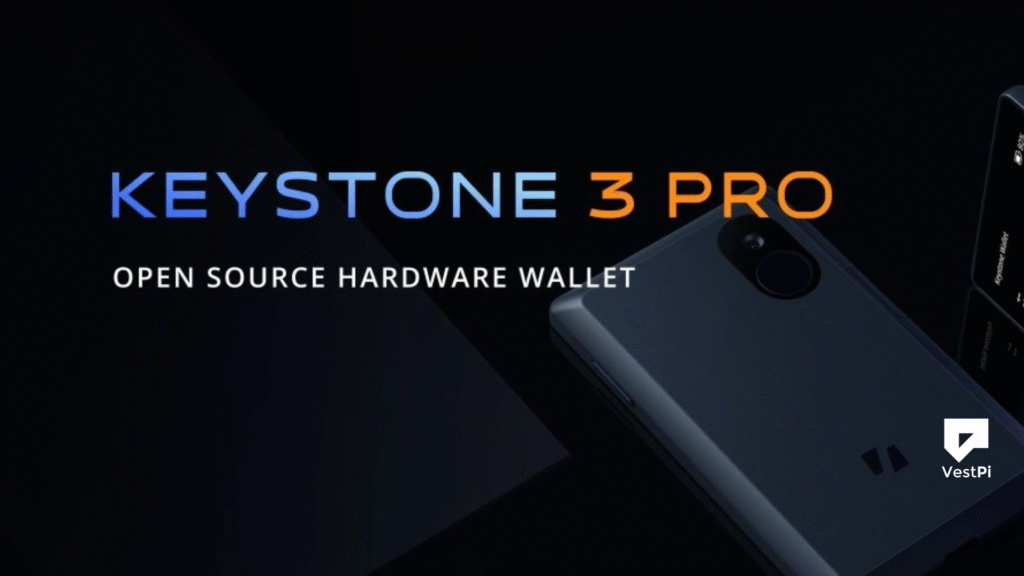
Keystone (previously Cobo Vault) is a popular choice for advanced DeFi users who require the highest level of security due to its innovative method of key protection. The Keystone 3 Pro is an air-gapped hardware wallet that lacks WiFi, Bluetooth, USB, and NFC connectivity.
With it, your phone or PC scans the QR codes displayed on its 4-inch touchscreen to relay all transaction data. Your private keys never come into contact with anything that is connected to the internet, thanks to this design, which essentially removes remote attack vectors.
However, Keystone goes one step further to serve DeFi customers by supporting complicated transaction data presentation and signing, such as multi-step DeFi transactions and Ethereum smart contract calls (EIP-712).
It helps people with large holdings who are concerned about a single backup point of failure by supporting Shamir’s Secret Sharing (SSS), which divides your recovery phrase into several portions that can be stored independently.
The gadget has a self-destruct mechanism that may wipe the keys if tampering is detected, as well as a fingerprint reader for fast and safe unlocking.
Advanced traders can use Keystone as the signature device while crafting transactions using familiar interfaces on their computer or phone because it is compatible with major wallet software like MetaMask (mobile via QR) and many more.
9. SafePal S1
The SafePal S1 has become a well-liked choice for experienced users looking for an affordable hardware wallet without sacrificing capabilities. The SafePal S1, an air-gapped hardware wallet supported by Binance Labs and priced at about $50, is unique in that it has a whole ecosystem to facilitate active DeFi use.
In terms of hardware, the SafePal S1 lacks wireless connectivity and, like the Keystone, signs transactions using QR codes or encrypted QR-like patterns on its little screen, guaranteeing your keys stay completely offline.
In addition to having a secure element chip (certified EAL5+) to guard against physical assaults, it has an anti-tamper self-destruct mechanism that will wipe itself clean if someone tries to hack or pry it open. Typically, more costly wallets include these amazing security features. Because of this strong foundation, sophisticated traders can confidently commit large assets to the SafePal gadget.
The SafePal mobile app is among the most adaptable in terms of asset coverage because it supports an extraordinarily broad variety of cryptocurrencies, including more than 10,000 tokens and more than 100 blockchains.
SafePal basically combines the security of a cold wallet with the ease of use of a hot wallet interface. For example, advanced users can utilize the SafePal app to connect to Uniswap or PancakeSwap and trade while all necessary permissions take place on the physical device. Compared to some other hardware wallets that rely more on third-party integrations, DeFi’s workflow is far more efficient.
10. Cypherock X1
The Cypherock X1, a genuinely inventive gadget that questions conventional ideas of seed storage, completes our list. Cypherock’s solution eliminates the need to write down a recovery phrase, which has long been the weakness of self-custody, and is aimed at the ultra-security-conscious (think fund managers or high-net-worth hodlers dabbling with DeFi).
For advanced users, this solution is brilliant in two ways: it eliminates the single point of failure of a paper backup (there’s no 24-word seed for someone to find or for you to lose), and it reduces the danger of device loss (even if your X1 vault is destroyed, you can recover with two of the cards). This method significantly improves peace of mind for professionals overseeing sizable portfolios.
The Cypherock X1 vault itself is an air-gapped hardware wallet that performs similarly to others – it signs transactions offline and connects with a companion program (CySync) via the NFC cards or a cable connection.
It supports a large assortment of cryptocurrencies (60+ major coins and 1000s of tokens on Ethereum and other networks) and NFTs, therefore it is quite capable as a DeFi wallet storage solution. To prove you have the necessary shares, you must authenticate a transaction by tapping two of your cards to the device or your phone.
Despite its security features, the X1 is still reasonably easy to operate. Instead of a touchscreen, its interface uses a tiny joystick, which some may feel outdated, yet it’s responsive. The packaging emphasizes its function as a long-term vault by including card covers and a protective case.
Take Home
A new class of expert traders and investors has emerged as a result of the decentralized financial revolution, and this has led to an unprecedented need for equally sophisticated wallets. As we’ve seen, each of the “10 DeFi wallets” mentioned above offers a special combination of features designed to meet the demands of experienced users, from the cutting-edge security of Keystone and Cypherock to the ubiquity of MetaMask and Rabby’s DeFi-specific protections.
A skilled trader’s toolbox frequently consists of several wallets that cooperate with one another. People frequently use Ledger or Trezor to secure larger holdings, MetaMask or Rabby for daily trading and yield farming, and possibly a specialized wallet like SafePal or Best Wallet for particular jobs or networks.
The secret is to keep flexibility and self-custody at the center. Experienced users select wallets in the same way a craftsman selects tools, understanding that while no wallet is flawless, each can be excellent for specific uses.
As features like transaction simulation, gas abstraction, and tamper-proof hardware demonstrate that wallet providers are paying attention to the needs of power users, security procedures are also getting better.