
As some of you know, I’ve tutored hundreds of thousands of developers, and if there’s one piece of advice I always provide, it’s this: never handle large amounts of money or protocol rights using a regular wallet. Never.
Why do I insist on this so much? Basic wallet security flaws have led to the compromise of numerous projects. A multi-signature (multi-sig) wallet is more than just a “nice to have”; it’s essential whether you’re creating a new protocol, managing a DAO’s treasury, or merely protecting substantial assets.
Along with many other things you should know, this post will show you how to set up a multi-sig wallet, one of the industry’s most reliable solutions.
What Is a Multi-Sig Wallet?
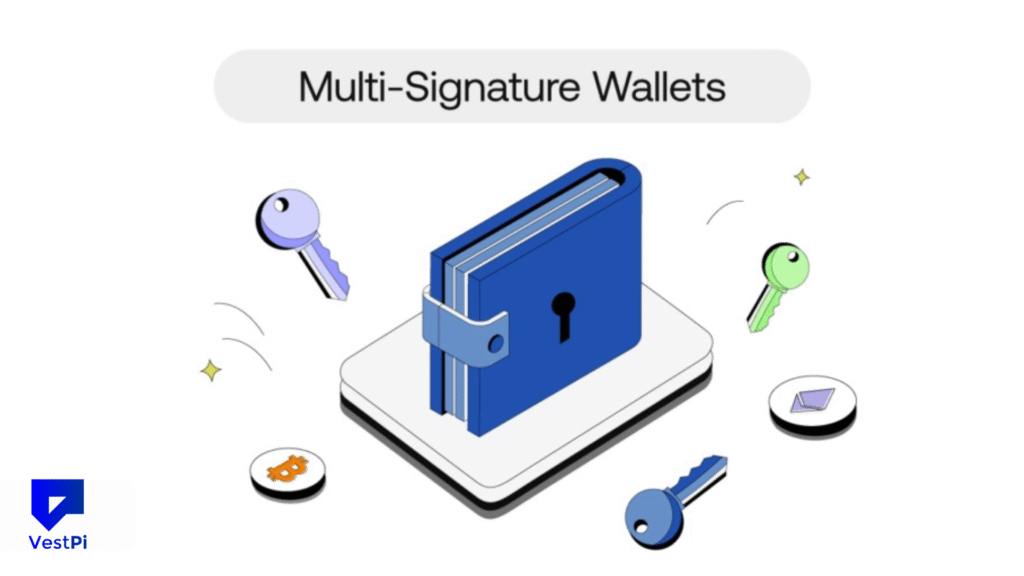
A multi-sig wallet is a one of a kind cryptocurrency storage system that needs several private keys to approve a transaction. You can call it a smart contract wallet that needs several authorizations before a transaction can be carried out.
Multi-sig wallets spread authority among several signers, improving security and lowering the possibility of a single point of failure, in contrast to conventional wallets that are managed by a single private key.
Multi-sig wallets are commonly used by businesses, decentralized autonomous organizations (DAOs), and protocols to guarantee group control over money and essential permissions. Businesses that provide multi-sig wallets include:
- Rabby Wallet: Rabby Wallet is a web3 wallet with integrated security checks that automatically switches networks based on the visited dApp for Ethereum and EVM-compatible chains.
- MPCVault: MPCVault is a multi-chain, non-custodial wallet for web3 teams and companies that uses cutting-edge multi-sig and multi-party computation (MPC) technology to secure millions of transactions per day.
- Liminal: Liminal is a multi-sig and MPC wallet designed for Web3 projects, exchanges, and businesses.
By eliminating single points of failure and reducing the possibility of unwanted access or lost money, this configuration improves security. Multi-sig solutions are used by individuals, corporations, and institutional investors to safeguard their assets.
How Does a Multi-Sig Wallet Work?
A multi-signature wallet in cryptocurrency needs the consent of multiple people in order to approve transactions. Such a privilege is distributed within a unit or group rather than giving one person total control.
For instance, in a three-of-five arrangement, five people are in charge, but before any money is released or transferred, at least three people must concur. The transaction approval threshold is the name given to this procedure.
Collaborative security is provided by this approach. Teams, organizations, or DAOs that oversee shared cryptocurrency funds can benefit from it. It helps avoid errors, theft, and abuse because no one can act alone.
What Are the Importance of Multi-Sig Wallets?
Since they safeguard shared digital assets through cooperative decision-making, multisig wallets are crucial to Web3. They lower the risk, increase transparency, and make it more difficult for money to be stolen or misused by requiring many people to approve a transaction. They are employed in several Web3 domains as follows:
1. DAO treasuries
Funds generated by decentralized autonomous organizations (DAOs) typically belong to the community. Members of the DAO can decide how the money will be used in this case, thanks to a multisig wallet. It is nearly impossible for a single person to mismanage money using this strategy. It maintains community confidence, and provides group oversight.
2. Project governance
Crypto projects use multisig wallets to manage their funds or token reserves. Founders, developers, or advisors might share access, so one individual can’t seize control or shift assets without group consent. By doing this, a safety net is added and users and investors are reassured that project funds are managed appropriately.
3. Team wallets
Team wallets are frequently used by companies, startups, or Web3 development teams to handle operating funds. Before completing any significant transaction in a multisig system, co-founders or important team members must concur. This aids in avoiding mistakes, internal theft, and unapproved expenditures.
4. Escrow setups
In a multisig wallet, a third person can serve as an impartial signer in agreements or transactions between two parties. For instance, under a 2-of-3 arrangement, money is only disbursed with consent from the buyer and seller (or one party plus the impartial third party). This increases trust without depending on a central authority and eliminates the need for conventional middlemen.
Multisig wallets help avoid single points of failure by distributing control and increasing transaction approval thresholds. This shared control is ideal for Web3’s decentralized and trustless systems, which disperse power and allow for collective oversight of actions.
How to Set up A Multi-Signature Wallet?
To guarantee security and accessibility, a multi-sig configuration needs to be carefully planned. Every stage keeps money recoverable in the event that a key is misplaced while preventing illegal activities.
Step 1: Define the Multi-Sig Policy
Prior to setting up the system, users must establish important rules:
- Decide how many persons will be in possession of the keys.
- Determine the number of approvals required for a transaction.
- Assign important people and specify their responsibilities.
Step 2: Generate and Store Keys Securely
Unauthorized access and key loss are avoided with proper key management:
- Use an air-gapped computer or a hardware wallet to generate keys offline, which lowers the risk of hacking by never connecting to the internet.
- To prevent theft or loss, store keys using strong passphrases and BIP39 seed phrases.
- To divide a key into several pieces so that only a predetermined number of shares can be recreated, use Shamir Secret Sharing (SSS).
- To prevent manipulated devices, get hardware wallets directly from manufacturers.
Step 3: Create the Multi-Sig Setup
Configure the wallet after security has been established:
- Choose one of the suggested wallets that supports multiple signatures.
- To meet security requirements, set up the wallet with the agreed-upon m-of-n settings.
- To ensure that the system acknowledges every approval, signers should share public keys.
Step 4: Generate and Verify the Multi-Sig Address
A correct address prevents lost funds: Before using the generated multi-sig address, each signer must verify that it is correct.
Step 5: Test With a Small Transaction
A test transaction verifies that the system functions as intended:
- Send a brief transaction that needs each signer’s consent.
- Verify that all signers are able to authorize transactions and that money displays accurately.
The seed phrase is necessary to recover a cryptocurrency wallet. Each signer in a multi-sig arrangement must safely retain their seed phrase; otherwise, if too many keys are lost, the wallet might not be recoverable.
How to Send Funds from A Multi-Sig Wallet
Before being broadcast to the Bitcoin network, a multi-sig transaction needs several approvals. Every stage keeps money under shared control, guarantees security, and guards against mistakes.
1. Initiating the Transaction
Using a wallet that supports multiple signatures, one signer initiates the transaction. To avoid mistakes or assaults, the recipient’s address must be confirmed before moving forward.
2. Selecting Inputs and Calculating Fees
To finance the transaction, the wallet chooses Unspent Transaction Outputs (UTXOs). For more privacy and charge control, users can manually modify inputs. The wallet effectively processes the transaction by determining the necessary network fee.
3. Using PSBT for Multi-Sig Approval
The transaction is exported as a PSBT by the wallet. Signers can approve using this method without disclosing private keys.
4. Exchanging the PSBT Among Signers
The PSBT is sent to signers by file transfers, QR codes, or other secure means. After loading it into their wallet and reviewing the transaction details, each signer adds their signature.
5. Aggregating Signatures and Finalizing the Transaction
The final signature aggregation creates a completely signed transaction once the necessary number of signers have given their approval. The transaction is prepared for broadcast by the initiator or a selected co-signer.
6. Broadcasting to the Bitcoin Network
The fully signed transaction is sent to the Bitcoin network by the wallet software. It goes into the mempool and waits to be added to a block by miners.
7. Confirming the Transaction on the Blockchain
By appending the transaction to a block, miners validate it. Security is strengthened by additional confirmations; the highest level of confidence is provided by six confirmations.
Security Tips and Recommendations
I’ve discovered the following recommended practices, sometimes the hard way:
- Use hardware wallets: If at all possible, give your signers hardware wallets.
- Verify every time: Don’t omit transaction verification.
- Make informed decisions on minimal signature thresholds: Strike a balance between operational requirements and security.
- Test first: Before accessing the mainnet, always practice on testnets.
When dealing with big sums of money, don’t forget to double-check every aspect. After that, you can safely take advantage of your multi-sig wallet’s improved security and functionality.
Bottom Line
For crypto users, multi-sig wallets offer a higher degree of protection. They provide robust security against fraudulent transactions and money loss, but they do require careful setup and management.
Setting up and maintaining a safe wallet is essential, whether you’re developing the next major decentralized finance (DeFi) protocol or overseeing the treasury of a DAO.
Start with a testnet deployment, familiarize yourself with the interface and procedures, and then confidently transition to the mainnet. Users need to be aware of security risks, use best practices for key storage, and select the appropriate wallet.