
As a newcomer to cryptocurrency investing, one of the first things you should consider is how to use cold wallets safely. Knowing how and where to keep your cryptocurrency before pushing the “buy” button is critical for avoiding an early failure in your crypto investment journey.
This guide explains how to use a cold wallet, how it works, and why it’s the safest way to store cryptocurrency.
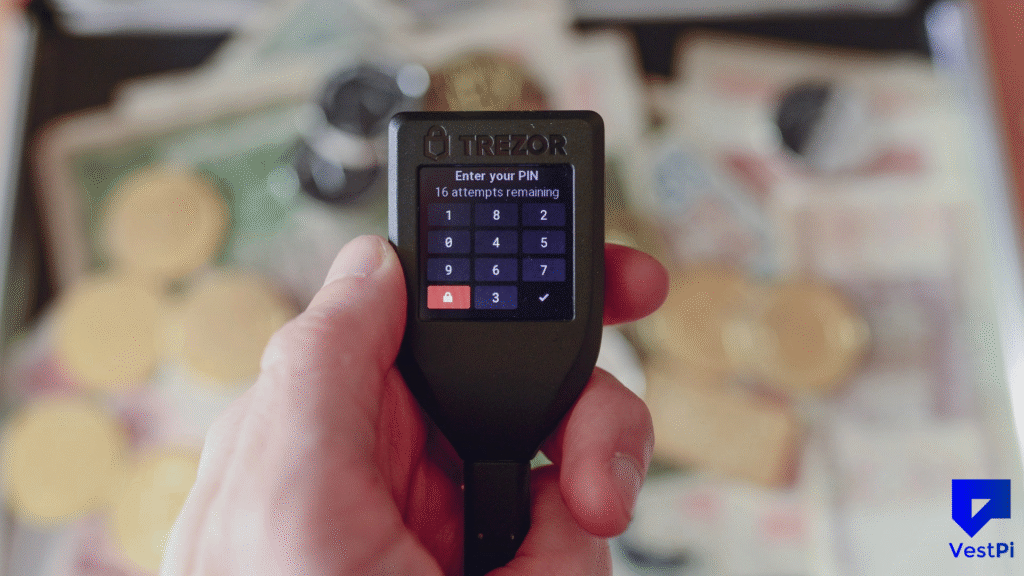
What Is a Cold Wallet?
A cold wallet is a cryptocurrency wallet that maintains private keys offline. Because it is not connected to the internet, it is safe from cyber-attacks and dangers. A cold wallet is an offline storage solution for Bitcoin and other cryptocurrencies. This means that it is not connected to the internet and is therefore resistant to hacking, phishing assaults, and malware.
A crypto cold wallet, unlike hot wallets or custodial exchanges, gives you complete control over your private keys. Crypto cold wallets can into various categories, which can impact their vulnerability to hacking.
Simply put, there are two types of cold wallets: electronic and non-electronic. Then, under these two categories, there are several varieties of cold wallets, which we will discuss further in this article.
Categories of a Cold Wallet
As previously stated, cold wallets can take many distinct shapes. There are two types of wallets: electronic and non-electronic. These include hardware wallets (which can also be paper wallets) and metal backup wallets. Each has unique advantages and applications.
Hardware Wallets
- Devices such as Material Bitcoin, NGRAVE Zero, and Ledger store private keys offline.
- Can include an electronic component, such as a screen or a metal cold card.
Paper Wallets
- Printed QR codes and private keys require manual security to prevent damage or loss.
- Is more susceptible to daily wear and tear.
Metal Backups Wallets
- Create indestructible cold wallet backups using your seed phrase.
- DIY and Cryptosteel are popular options for protecting recovery phrases from fire, water, and physical harm.
- For optimal results, keep your physical device in a secure location. Make sure no one knows where you put it, and if you’re using an electronic hardware wallet or a paper wallet, keep it in a fireproof, waterproof safe.
Remember to always keep a metal backup in case your cold wallet is lost or stolen, and never reveal your private key to anybody.
Pros and Cons: Electronic vs. Non-Electronic Cold Wallets
| Feature | Electronic Cold Wallet | Non-Electronic Cold Wallet |
|---|---|---|
| Requires Battery | Yes, needs charging or replacement over time | No, does not require a power source |
| Screen for Portfolio View | Yes, allows you to view your crypto holdings | No, must verify assets manually |
| Risk of Physical Damage | Higher risk, screen and components can break | Minimal risk, usually made of durable metal, like Material Bitcoin |
| Requires a Third-Party Device (Computer/Mobile) | Yes, must connect to a computer or mobile phone | No, fully independent once set up Material Bitcoin cold wallets don’t require any setup |
| Ease of Use | Easier to use with user-friendly software | Requires manual backup and verification |
| Security | Secure, but still relies on a device that can be hacked | Maximum security, fully offline with no digital exposure |
Cold wallets are not only an option for crypto security, but a need. If you have a substantial amount of cryptocurrency, you should move it directly to a cold wallet.
With the increased threat of cyber attacks, storing your private keys safely offline is the only way to ensure complete control over your digital assets.
Trusted Cold Wallets
To secure your cryptocurrency, consider these top cold wallet options:
- Material Bitcoin: Material Bitcoin is the simplest and most secure Bitcoin-only cold wallet, with no electronic components to hack. Also available for Ethereum and Tether.
- Ledger Nano X: The Ledger Nano X is a Bluetooth-enabled hardware wallet that can hold numerous cryptocurrencies.
- Arculus: Arculus is an air-gapped wallet that supports three-factor authentication.
- Tangem Wallet: Tangem Wallet is a smart card-based cold wallet. Perfect for many users.
- Ellipal Titan: Ellipal Titan is a fully air-gapped, tamper-proof hardware wallet with a big touch.
Each of these wallets carries a unique user experience, catering to different crypto storage needs.
How to Use a Cold Wallet for Your Crypto
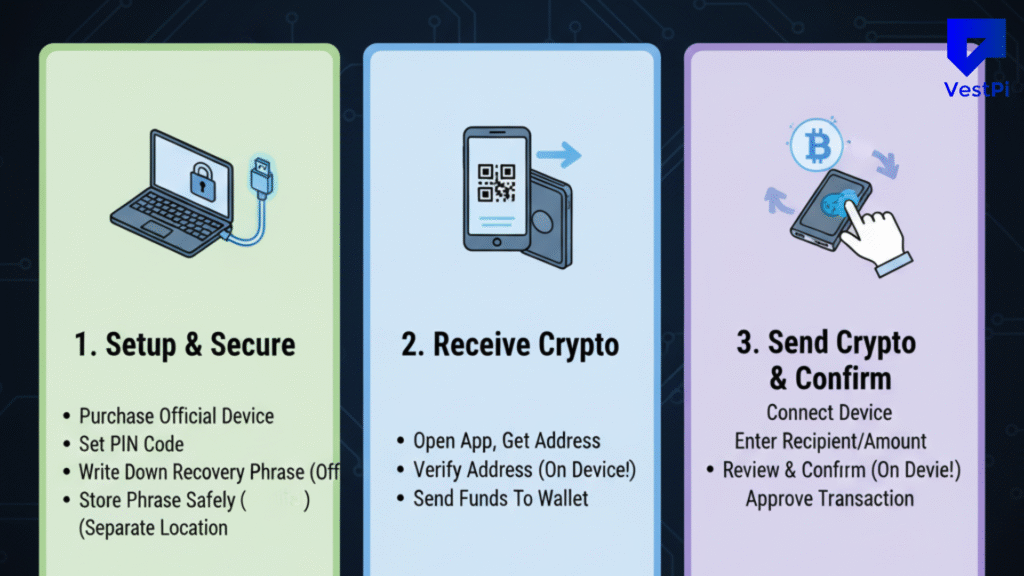
There is no reason to feel overwhelmed. Follow these steps to set up and use a cold wallet safely on Coinbase, for example.
1. Choose a Cold Wallet
Choose a dependable cold wallet based on your demands.
- Material wallets offer convenient, airtight storage for non-electronic items.
- Trezor Model T is an open-source wallet that uses a touchscreen interface.
2. Set up And Secure Your Wallet
- Create a private key and 24-word recovery seed phrase during setup.
- Secure your seed phrase and keep it secure (never online).
3. Transfer Cryptocurrency to Your Cold Wallet
- Copy the cold wallet address from your device.
- Withdraw funds from an exchange (such as Coinbase or Binance) using your wallet address.
- Verify the address and complete the transaction.
4. Store Your Wallet Safely
- Store your cold wallet in a fireproof safe, and keep the backup separate.
- Never reveal details about your cryptocurrency holdings.
5. Check Your Crypto Balance Securely
- Use a blockchain explorer to check your wallet balance.
- Enter your public address, not your private key!
How to Transact with a Cold Wallet?
Using a cold wallet to store your cryptocurrency requires you to transfer funds from an exchange such as Coinbase. Here’s how to transfer cryptocurrency from Coinbase to a cold wallet.
- Log in to your Coinbase account.
- Navigate to the Send/Withdraw section.
- Enter your cold wallet address or scan the QR code on your device.
- Double-check the address.
- Confirm your withdrawal and wait for network confirmations.
Setting Up Your Cold Wallet
Setting up your cold cryptocurrency wallet requires cautious consideration.
- First, unbox your wallet and ensure its legitimacy by confirming that the packaging has not been tampered with.
- During setup, your wallet will create a 24-word recovery phrase.
- Keep this on a physical backup and never keep it digitally.
- Next, create a strong PIN or password to prevent unwanted access.
Before transferring significant sums, always test a tiny transaction to ensure everything works properly.
Cold Wallet Security: Best Practices
| Practice | Details |
|---|---|
| Use a Metal Backup | Store your recovery phrase in a fireproof, waterproof metal backup like Material DIY to prevent loss or damage. |
| Store in a Secure Location | Keep your cold wallet and seed phrase in a fireproof and waterproof safe to protect against physical threats. |
| Use Multisig Wallets | For extra security, use a multisig wallet like Material Shadow, which requires multiple signatures to approve transactions. |
Common Risks and Disadvantages of Cold Wallets
Although using a cold wallet provides high-level cryptocurrency security, there are still concerns to be aware of. Understanding these disadvantages might help you plan and manage your assets more effectively.
- Physical Damage or Loss: Because cold wallets are physical objects, they can be misplaced, damaged, or stolen if not stored properly. Use a fireproof and waterproof safe to reduce these dangers.
- No Recovery Without Backup: If you lose your recovery seed phrase, you will permanently lose access to your cryptocurrency. Using a metal backup like Material DIY is essential!
- Less Convenient for Frequent Transactions and Day Traders: Cold wallets require a manual process for sending cryptocurrency, which may irritate frequent users. Cold wallets are ideal for storing significant quantities of cryptocurrency for long-term holding.
You should use a cold wallet since they are the most effective way to protect your cryptocurrencies against internet dangers, phishing assaults, and exchange failures.
Top Cold Wallets for 2025

| Wallet | Security Rating | Supported Cryptos | Price | Ease of Use |
|---|---|---|---|---|
| Material Bitcoin | Five Stars | Bitcoin | $89 | Very Easy |
| Arculus | Four Stars | Multi crypto | $99 | Easy |
| Tangem | Four Stars | Multi crypto | $49.41 to $144 | Easy |
| Coldcard MK4 | Five Stars | Bitcoin | $157.94 | Advanced |
| KeepKey | Three Stars | Multi crypto | $100 | Moderate |
Why Use a Cold Wallet For Your Crypto Storage?
Cold wallets are the most effective defense against hackers, phishing assaults, and exchange failures.
You have complete control over your cryptocurrency, and Material Bitcoin offers simple, safe, and offline Bitcoin storage for maximum protection.
Conclusion
Cryptocurrency can be held using a variety of techniques, including cold storage, hot wallets, and paper wallets, and security features such as two-factor authentication can improve safety. Hot wallets connect to the internet, whereas cold wallets do not.
Paper wallets enable the physical storage of your credentials. Hot wallets are susceptible to hacking, paper wallets are prone to physical harm, and cold wallets can be lost or stolen. Before deciding where to keep your Bitcoin, you should study exchanges, taking into account things like reputation, customer service, and fee structures.