High-profile rug pulls in new crypto projects this year show how hype, celebrity tie-ins, and low liquidity are used intelligently to trick victims. The good news is that by being aware and doing some detective work, you may significantly lower your chances of falling victim to such scam attempts.
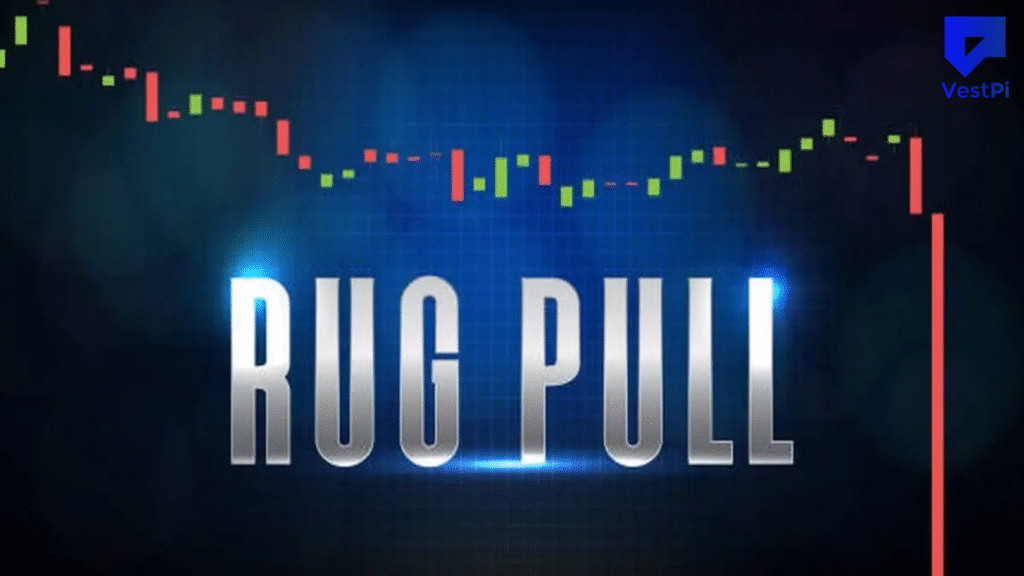
Have you or your partners been “rug-pulled”? Have you ever come across an attractive cryptocurrency project that promised unearthly rewards, only to discover that it was a hoax all along?
The growing popularity of cryptocurrencies has led to an increase in rug pulls. This is why it’s critical to be able to identify a potential rug pull before it occurs, so you don’t lose your entire investment!
In this part, we will look at rug pulls. Specifically, I’ll explain how to identify a potential rug pull, how to avoid it, as well as key instances of rug pulls in 2025!
What is a Rug Pull?
If you’re unfamiliar with rug pulls, we recommend reading the section dedicated to them. I’m not going to go into detail on what a rug pull is here because this part is intended to be a continuation of the one I just described.
In clear terms, a rug pull is a cryptocurrency scam. Rug pulls occur when project developers or owners steal investors’ capital – in other words, investors have “the rug swept out from under their feet”. That is where the term comes from!
When I previously stated, when cryptocurrency grows in popularity, there is also an increase in rug-pulling actions. Never before has it been more important to learn how to defend yourself from the myriad scams floating around the internet!
This is especially true given the fact that these scammers use a variety of rug pulling strategies. Don’t worry, no matter how many various ways they try to defraud investors, the strategies for detecting and avoiding a potential rug pull are always the same.
Types of Rug Pulls
Rug pulls are normally divided into two types: hard and soft. Hard rug pulls are more severe and sudden, resulting in participants losing all of their possessions in a short period of time. Soft rug pulls occur over time, with the main development team offering participants a false sense of security as they quietly shut down.
Common rug pulls include:
- Liquidity Pulls: Malicious actors can eliminate liquidity from a token pool, causing its value to drop owing to a shortage of buyers and sellers.
- Fake Projects: Scammers construct seemingly legitimate projects, collect participation, and then depart with the assets, leaving participants with useless tokens.
- Pump and Dump: Pump-and-dump fraud involves inflating a token’s price through coordinated buying, only to sell at the peak, causing the value to fall.
- Team Exit: The project’s team members abruptly withdraw or leave, leaving participants with no support and a collapsing token.
How to Identify and Avoid a Potential Rug Pull?
In this section, we’ll look at 5 classic signals that a project may be a disaster waiting to happen. If you observe any of these indicators, proceed with caution; if you notice all of them, well… I don’t think I need to say it aloud.
Keep in mind that these signals can also indicate a potential rug pull for NFT projects. Many of these same indications should be evaluated and investigated while determining how to avoid an NFT rug pull.
General Outlook and Social Authority
To begin, when researching a cryptocurrency project, you should analyze it from a distance. What I mean by this is, how do they market? Is there a legitimate community that supports the initiative and its mission? Or are mainstream celebrities and high-profile YouTubers discussing it?
Legitimate projects typically avoid sponsored content from YouTubers and celebrities on social media. That’s because they realize that a) it looks shady, and b) neither those celebs nor the YouTubers are likely to be familiar with cryptocurrency, or at least the project that they would be pushing.
As you can guess, the entire event would come across as pretty dishonest! Solid and well-designed projects are unlikely to go out of their way to market themselves using unrelated, high-profile names. Instead, the real company or team behind the project, as well as the community that they’ve managed to recruit, are in charge of all marketing.
To identify a potential scam, look for high-profile individuals discussing a new cryptocurrency or token, even if they have no prior involvement in the industry. However, I must admit that this can be problematic because the actual influencer is not always the terrible guy. If you want to see what an alleged rug pull looks like, one of the most recent high-profile incidents is that of streamer Ice Poseidon and CxCoin.
Liquidity
If you want to avoid rug pulls, check for the second sign: project liquidity. It’s a vast topic, but for the time being, you should be aware that a project’s liquidity might reveal a lot about a prospective rug pull!
If you look at the liquidity of a new project (or token) and notice that it is really low, that is already a red flag. Projects with liquidity of up to $100,000 are frequently viewed as being extremely easy to manipulate!
Consider this: if the liquidity pool contains only a few thousand dollars’ worth of tokens, the project owners may simply deposit $1000 into it, artificially increasing the token’s price dramatically!
If you want to avoid rug pulls, check for the second sign: project liquidity. It’s a vast topic, but for the time being, you should be aware that a project’s liquidity might reveal a lot about a prospective rug pull!
Token Allocation
The third significant factor to consider is token allocation. Check the number of tokens owned in top wallets (sometimes called whales).
Fortunately, that is really simple to do! Blockchain Explorers are specialized services. Etherscan and BscScan are popular apps that allow you to enter the smart contract address of any Ethereum or Binance Smart Chain project and find wallets with the most tokens.
If the top ten wallets control more than 15% or 20% of all accessible tokens, stay away from that project! What could happen is that whale wallets decide to dump all of their tokens into the market, causing the token price to fall in a matter of minutes.
Checking project token allocation is entirely free and usually only takes a few minutes. Make sure you do this with any projects you intend to invest in! After all, it’s one of the simplest methods to identify a rug pull.
Check the Project Whitepaper – Roadmap
The fourth step involves creating the project’s whitepaper. Imagine a friend approached you and informed you about “this amazing new company” in which he had invested money, and he urged you to do the same. Before investing in a firm, it’s recommended to conduct research on its offerings. Consider researching the company’s mission statement, roadmap, and other relevant information.
Yes, cryptocurrency projects are the same! If you want to prevent getting rugged, you should read the project’s Whitepaper or roadmap!
Many upcoming rug pulls lack robust whitepapers. Instead, they are loaded with strange crypto jargon and are typically brief. If you read the Whitepaper and come away with less comprehension than before, you should avoid the project!
Whitepapers are an excellent method to learn more about the project. A solid rule of thumb to follow is that if the Whitepaper appears to be a sales pitch and appeals to your emotions (in other words, urgently attempts to sell you something), it should not be regarded seriously at all.
Repeated Templates
The fifth approach to avoid a crypto rug pull involves using “repeated templates…”. You should envision me saying this with a really suspicious look on my face. So, it’s fairly simple: if you feel like you’ve seen this exact project model a few times before, you may be becoming rough. Scammers often copy-paste code from another project and alter only a few variables, such as the token name, rather than starting a new project.
This applies to both the presentation of the project and the programming behind it. If you know what you’re doing and where to look, you can literally “create” (or replicate) a “new” cryptocurrency project in hours, if not minutes.
If you are an investor, that sounds extremely perilous. However, it is also beneficial because it simplifies the process of selecting the best cryptocurrency project for yourself! If you feel like you’ve already read that Whitepaper or seen this exact same marketing ploy several times, you should generally avoid investing in the project, as it could end up being a rug pull.
Top-3 Rug Pulls of 2025
If all this sounds a bit scary, well, the truth is, there have been some high-profile crypto scams this year. By understanding how these scams unfolded, you can better recognize patterns and avoid the next ones.
Libra Memecoin Rug Pull – February 2025
LIBRA, the Solana-based memecoin, gained considerably in February 2025 following President Milei’s tweet, which stated that the coin’s initiative will benefit Argentina’s economy and small businesses. According to Dexscreener, this favorable tweet increased LIBRA’s market capitalization to $4.5 billion at the time.
The price of LIBRA dropped by 95% within hours of reaching its high due to the project’s originator address removing liquidity and cashing out the $107 million. Analysts also noted that the LIBRA website was constructed just hours before the launch and that the domain was registered for a year – a classic rug pull tactic.
The aftermath had legal ramifications, with Argentine authorities conducting a fraud probe and calling for Milei’s impeachment. Argentina’s anti-corruption body stated in early June that President Javier Milei’s public backing for the LIBRA memecoin did not break ethical guidelines. The agency found that Milei was operating on his own behalf and that his support for memecoin did not constitute official policy.
Wolf of Wall Street (WOLF) Token Rug Pull – March 2025
The token’s euphoria was driven by claims that Jordan Belfort, the former stockbroker portrayed by Leonardo DiCaprio in the 2013 film The Wolf of Wall Street, would support the currency, driving it to a high market cap of $42 million on March 8, 2025. Notably, Hayden Davis, the mastermind of the infamous Argentine memecoin LIBRA, is also engaged with WOLF, as Bubblemaps uncovered.
The WOLF memecoin appeared in Davis’ wallet, where he had previously launched the LIBRA token. One of the symptoms of a rug grab was that insider wallets tied to Davis controlled more than 82% of WOLF’s supply. Unsurprisingly, when WOLF started on March 8, the token’s market capitalization dropped by 99% as the WOLF/SOL pool’s liquidity was exhausted.
Eric Trump Fake Token Rug Pull – May 2025
This year’s hype surrounding the Trump name motivated unscrupulous characters to make analogous coins. In May 2025, the ERICTRUMP meme token, unrelated to US President Donald Trump’s son Eric Trump, surged by 6,200% in 24 hours after its introduction on Pump.fun. According to CoinMarketCap, the token’s capitalization reached $140 million before the exchange rate fell by 99%.
Prior to this successful hoax, the same deployer wallet had launched three other Eric Trump coins (all of which failed). Bubblemaps detected unusual bundling of tokens among associated wallets prior to the crash.
Looking at these examples, a clear picture emerges: rug pull fraudsters prey on excitement, hype, and FOMO (and, regrettably, even those with enormous audiences and influence can fall for their tricks), and they take advantage of the fact that blockchain transactions are irreversible. As traders, the best we can do is learn from these experiences and stay watchful.
Conclusion
Cryptocurrency investing will always be risky, but it does not have to be a gamble. Most frauds and rug pulls can be avoided by paying attention to red indicators and exploiting on-chain data. Remember, if it appears too good to be true, it probably is. The year 2025 has shown us that, while the crypto business matures in some aspects, scammers’ strategies evolve as well, from sophisticated marketing and influencer endorsements to complicated on-chain obscuration. The advantage is that the community and analytical tools are better than ever at detecting these techniques early.
As a trader, you should always DYOR. Examine new ideas like a detective, diversify your portfolio so that no single bad gamble destroys you, and don’t let greed or hype cloud your judgment. Stick to initiatives with transparency, real-world use cases, and audited code, especially for large investments. And, if in doubt, wait and seek out independent information before investing in the “next big token.”