
A liquidity pool is an essential part of the decentralized finance (DeFi) ecosystem, allowing transactions to be completed without the use of traditional financial intermediaries by pooling cash in smart contracts. They incentivize liquidity providers with crypto rewards and a share of trade fees, promoting trading, lending, and other DeFi activities via mechanisms such as Automated Market Makers (AMMs).
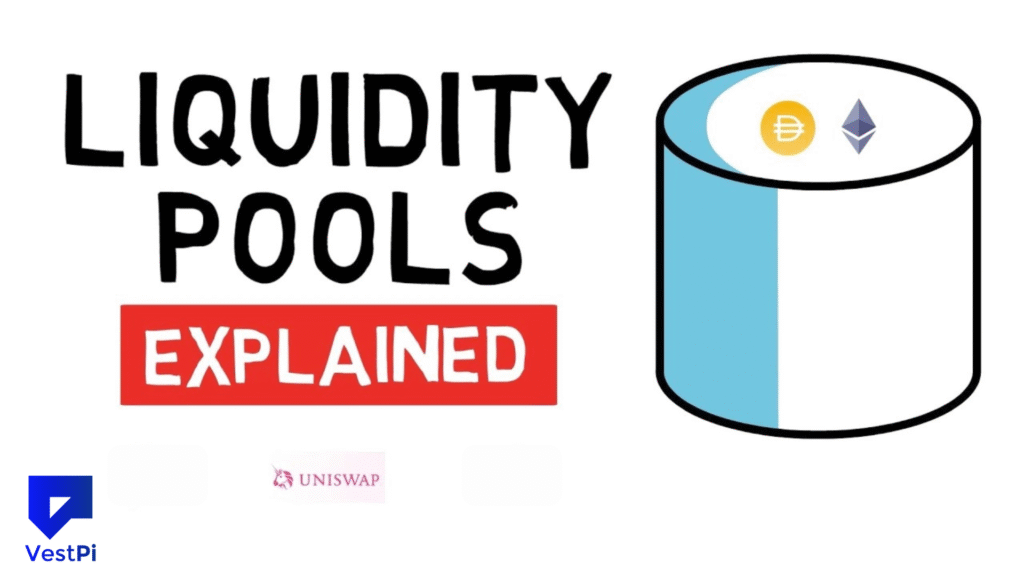
This democratization of finance makes financial services more available to the unbanked and underbanked, dramatically improving the reach and efficiency of financial tools worldwide. But what is a liquidity pool? Crypto liquidity pools enable decentralized exchanges (DEXs) to efficiently facilitate trades between buyers and sellers of cryptocurrency assets.
This article discusses bitcoin liquidity pools and how they work. It also looks at the benefits and drawbacks of crypto liquidity pools and shows how they might help users make money.
What Is a Liquidity Pool?
A liquidity pool is a collection of cryptocurrency stored in a smart contract. The pool’s objective is to facilitate trades. Decentralized exchanges (DEXs) employ liquidity pools, allowing traders to swap between different assets within the pool.
It is a collection of cryptocurrency assets used to facilitate transactions on decentralized exchanges. When an investor buys or sells assets on a centralized cryptocurrency exchange, a centralised market maker often pairs buyers and sellers to complete the transaction.
How Does a Liquidity Pools Make Money?
Liquidity pools make money by offering users an incentive to stake their cryptocurrency in the pool. This typically takes the form of liquidity providers receiving cryptocurrency rewards and a percentage of the trading costs that their liquidity facilitates.
When a provider provides liquidity to a pool, he or she is typically compensated with liquidity provider (LP) tokens. These tokens have their own value and can be used for a variety of purposes within the DeFi ecosystem. To withdraw the monies they deposited into the pool (plus the fees they received), providers must destroy their LP tokens.
Liquidity pools use automated market maker (AMM) algorithms to automatically maintain fair market value for all of their tokens. Different pools may have slightly different algorithms. For example, several DEXs utilize a “constant product formula” to maintain token price ratios. This algorithm assists in managing the cost and ratio of tokens based on demand. As market demand and supply fluctuate, prices follow suit.
When an investor buys or sells assets on a centralized cryptocurrency exchange, a centralised market maker often pairs buyers and sellers to complete the transaction. On decentralized exchanges, trading liquidity is derived from a pool of assets to which liquidity providers contribute.
When users want to trade their crypto assets, an automated market maker (AMM) pulls liquidity from the pool and executes the transaction. Liquidity pools gather and retain assets from liquidity providers (LPs), who deposit them into the pool. In exchange for taking on the risks of investing their funds, LPs receive a token representing their portion of the liquidity pool.
The token entitles LPs to a share of the transaction fees collected by the AMM when users trade assets through the pool using decentralized exchanges. Algorithms establish the fair market value of tokens in a pool.
What is the Purpose of a Liquidity Pool?
A liquidity pool’s primary goal or purpose is to offer liquidity for distributed exchanges (DEXs) by generating a crowdsourced pool of cryptocurrency tokens kept in a smart contract. This lets users trade assets without a normal order book, makes quick swaps easy, and lets an Automated Market Maker (AMM) set prices automatically. These pools provide liquidity providers with fees and incentives, so enabling passive revenue streams and helping the general DeFi community.
The main goals of a liquidity pool include:
- Help with Decentralized Trading: Most DEXs use liquidity pools to replace conventional order books with a pool of assets that users may trade against.
- Provide Market Liquidity: They guarantee there is always enough volume to execute transactions, even for less common token pairings, by providing cash, therefore acting as market makers.
- Allow Automatic Pricing: Based on the token ratio, an AMM algorithm automatically determines the price of assets in the pool; it changes in real-time in response to market demand.
- Create Passive Income Opportunities: Give users, or “liquidity providers” (LPs), chances to earn a cut of the trading fees by putting pairs of tokens into a pool made by that pool; occasionally additional incentives.
- Help the DeFi Ecosystem: Many decentralised applications (dApps), including lending, borrowing, yield farming, and synthetic asset generation, depend on them as fundamental infrastructure.
- Improve Trading Efficiency: They can lead to faster transactions and less slippage for traders by replacing conventional order books and giving continuous liquidity, therefore improving trading efficiency.
Are Crypto Liquidity Pools Safe?
Crypto liquidity pools allow you to deploy or hold assets in DeFi while earning a return. However, if you supply liquidity, your assets may lose value when prices fluctuate. This loss is known as impermanent loss.
Advantages of Liquidity Pools
Some benefits of using crypto liquidity pools to offer liquidity on cryptocurrency exchanges include:
- Publicly viewable smart contracts: The smart contract code that governs crypto liquidity pools can be reviewed by the public, ensuring complete openness.
- Decentralisation: Buyers and sellers can conduct transactions without the need for a third-party middleman, such as a centralized exchange, which could interfere and stop/freeze transactions.
- Automation of trades: Trade automation occurs when liquidity pools use smart contracts and algorithms to match trades. This system ensures that all users are treated fairly on the exchange.
- Opportunities to earn: Crypto liquidity pools offer a variety of earning opportunities for liquidity providers. Liquidity providers can expect rewards based on the variables specified in the smart contract, such as asset kind, pool structure, and so on.
As long as there are liquidity providers, you’ll always be able to place a trade irrespective of the price.
Disadvantages of Liquidity Pools
When picking a liquidity pool to invest in, it is vital to look out for risks, including:
- Fraud: Fraudulent projects may grant extra privileges to developers, such as an admin key. Such keys may give developers power over the pool’s funds, exposing investors to rug-pulling frauds. When investing, it is critical to conduct thorough research on the smart contract to uncover any hidden benefits.
- Honeypots: This is a metaphor for something that is intended to entice and snare people, ending in the draining of their cryptocurrency.
- Impermanent loss: Impermanent loss is a regular danger that investors experience when they contribute funds to a liquidity pool. It arises when the value of deposited assets varies due to price volatility, leaving LPs with significant opportunity expenses.
- Smart contract bugs: A smart contract controls funds in a liquidity pool. A badly written smart contract may be prone to faults, causing token holders to lose money.
- Illiquidity: Illiquidity occurs when liquidity dries up, making trading an asset difficult.
Liquidity Pools Versus Order Books
Liquidity pools and order books offer multiple ways for processing user transactions. Buyers and sellers use order books to record the number of assets they are willing to acquire and sell at a specific price point. Order books are typically utilized on big centralised cryptocurrency exchanges, but a liquidity pool may not be required due to a high volume of buyers and sellers.
Liquidity pools, in theory, maintain a steady pool of assets from which users can trade. This is made feasible by liquidity providers depositing their assets, which are then locked up in the pool. One significant element of a liquidity pool is that traders receive consistent pricing at all times.
How to Participate in Liquidity Pools
To join in a liquidity pool, you must first choose a platform. Some popular choices are Uniswap, SushiSwap, Curve, and Balancer. Finding the ideal platform for you will be determined by a variety of factors, including the assets you seek, the types of rewards available, and the user interface that appeals to you the most. Some useful tools are CoinMarketCap and Pools, which allow users to evaluate various liquidity pools.
Next, you’ll need to connect a cryptocurrency wallet. The platform may require a special wallet. MetaMask is the most popular wallet for Ethereum-based decentralized exchanges. Be cautious to double-check that you’re connected to a legitimate DEX, as many scammers target user wallets during this step.
Now it is time to choose a pair. Returns on liquidity depend on how the pool operates and what assets it owns. Sometimes you may be required to supply “multi-asset liquidity,” which means adding both assets to a pool. For example, to provide liquidity for an ATOM/USDT pool, you may need to deposit equal amounts of both ATOM and USDT.
Finally, you can increase liquidity. After selecting your preferred asset combination and depositing the required number of tokens, you will be given LP tokens, which represent your share of the pool. Trading fee awards are often placed into the pool automatically. Users can redeem their incentives after exchanging their LP tokens.
Final Remark
Liquidity pools are an essential component of the DeFi ecosystem. Without them, most DeFi services would be insufficient. The automation of a trading market gives benefits such as lower slippage, faster transactions, LP awards, and the potential for developers to construct new dApps.
To participate in a liquidity pool and observe how it works for yourself, open an account on a decentralized exchange like as Uniswap. Of course, you’ll need a self-custody cryptocurrency wallet. MetaMask is a popular choice among DeFi users because to its ease of use and connection with web browsers. The Brave browser also includes a built-in web3 wallet, allowing users to easily access various dApps such as those utilized in DeFi.
Some hardware wallets provide straightforward DeFi integration. KeepKey hardware wallet users can utilize the ShapeShift platform to communicate with DeFi protocols directly from their wallet. The Ledger Live app provides comparable capabilities for Ledger users.
Remember that basic security procedures are essential when it comes to cryptocurrency, and participation in DeFi enhances user accountability. Always make a backup of your software wallets, keep your hardware wallet seed phrases safe and do not save them online, and never distribute your private keys or seed phrases with others. Be wary of social engineering attacks, such as phishing emails, and never download questionable files or click on suspicious links.
Frequently Asked Questions
Who Provides the Best Liquidity Pools in Crypto?
The greatest liquidity pools for investors depend on their risk tolerance and the cryptocurrency they are interested in. Uniswap, Curve, Balancer, Bancor, MakerDao, and Aave are among the most prominent cryptocurrency liquidity pool providers.
How Do You Earn from A Liquidity Pool?
Liquidity pools issue LP tokens, which are protocols that pay investors a percentage of the fees on each transaction. Investors can also participate in yield farms, which provide unique incentives to their investors.